<?xml version="1.0" encoding="UTF-8"?><feed
	xmlns="http://www.w3.org/2005/Atom"
	xmlns:thr="http://purl.org/syndication/thread/1.0"
	xml:lang="en-US"
	>
	<title type="text">CES 2018 Day 2: a big day for laptop news &#8211; The Verge</title>
	<subtitle type="text">The Verge is about technology and how it makes us feel. Founded in 2011, we offer our audience everything from breaking news to reviews to award-winning features and investigations, on our site, in video, and in podcasts.</subtitle>

	<updated>2018-01-16T15:43:12+00:00</updated>

	<link rel="alternate" type="text/html" href="https://www.theverge.com/2018/1/9/16868836/ces-2018-news-dell-razer-lenovo-ford-showstoppers" />
	<id>https://www.theverge.com/rss/stream/16632877</id>
	<link rel="self" type="application/atom+xml" href="https://www.theverge.com/rss/stream/16632877" />

	<icon>https://platform.theverge.com/wp-content/uploads/sites/2/2025/01/verge-rss-large_80b47e.png?w=150&amp;h=150&amp;crop=1</icon>
		<entry>
			
			<author>
				<name>Dani Deahl</name>
			</author>
			
			<title type="html"><![CDATA[This wireless MIDI ring allows you to perform musical effects with hand gestures]]></title>
			<link rel="alternate" type="text/html" href="https://www.theverge.com/2018/1/13/16868970/enhancia-midi-ring-keyboard-music-effects-ces-2018" />
			<id>https://www.theverge.com/2018/1/13/16868970/enhancia-midi-ring-keyboard-music-effects-ces-2018</id>
			<updated>2018-01-16T10:43:12-05:00</updated>
			<published>2018-01-16T10:43:12-05:00</published>
			<category scheme="https://www.theverge.com" term="CES" /><category scheme="https://www.theverge.com" term="Circuit Breaker" /><category scheme="https://www.theverge.com" term="Gadgets" /><category scheme="https://www.theverge.com" term="Tech" />
							<summary type="html"><![CDATA[French company Enhancia has been working on the concept for its MIDI ring for over a year, and it's finally coming to Kickstarter in March. The tiny accessory, worn on the index finger of your right hand, allows a user to trigger musical effects like pitch bends or vibrato by making specific movements while playing [&#8230;]]]></summary>
			
							<content type="html">
											<![CDATA[

						
<figure>

<img alt="" data-caption="" data-portal-copyright="" data-has-syndication-rights="1" src="https://platform.theverge.com/wp-content/uploads/sites/2/chorus/uploads/chorus_asset/file/10004389/jbareham_180107_2228_0017.jpg?quality=90&#038;strip=all&#038;crop=0,0,100,100" />
	<figcaption>
		</figcaption>
</figure>
<p>French company Enhancia has been working on the concept for its MIDI ring for over a year, and it's finally coming to Kickstarter in March. The tiny accessory, worn on the index finger of your right hand, allows a user to trigger musical effects like pitch bends or vibrato by making specific movements while playing a keyboard.</p>
<p>The ring, which is lightweight and made out of a soft plastic with a metal accent, communicates with a hub that is connected to your computer. The hub both charges the ring and also tells the ring which effects are mapped to which movements. There's also a standalone piece of software and a plugin, which can be used w …</p>
<p><a href="https://www.theverge.com/2018/1/13/16868970/enhancia-midi-ring-keyboard-music-effects-ces-2018">Read the full story at The Verge.</a></p>
						]]>
									</content>
			
					</entry>
			<entry>
			
			<author>
				<name>Angela Chen</name>
			</author>
			
			<title type="html"><![CDATA[Tech for the elderly is a growing area, but founders should think more about whether their gadget will be used]]></title>
			<link rel="alternate" type="text/html" href="https://www.theverge.com/2018/1/10/16863370/health-technology-aging-elderly-fall-prevention-dementia-hearing-aids-ces-2018" />
			<id>https://www.theverge.com/2018/1/10/16863370/health-technology-aging-elderly-fall-prevention-dementia-hearing-aids-ces-2018</id>
			<updated>2018-01-10T12:14:40-05:00</updated>
			<published>2018-01-10T12:14:40-05:00</published>
			<category scheme="https://www.theverge.com" term="Health" /><category scheme="https://www.theverge.com" term="Science" /><category scheme="https://www.theverge.com" term="Tech" />
							<summary type="html"><![CDATA[Health gadgets aren't just for the young. The elderly population is a growing business opportunity, and the category of "aging tech" now includes everything from smart hearing aids to connected toolkits for relatives with dementia. It's an important area with plenty of problems to solve, but some of the biggest problems with caretaking are social, [&#8230;]]]></summary>
			
							<content type="html">
											<![CDATA[

						
<figure>

<img alt="" data-caption="$800 Hip’Air airbag belt for fall prevention | Photo: Hip’Air" data-portal-copyright="Photo: Hip’Air" data-has-syndication-rights="1" src="https://platform.theverge.com/wp-content/uploads/sites/2/chorus/uploads/chorus_asset/file/10010279/Screen_Shot_2018_01_10_at_8.23.06_AM.png?quality=90&#038;strip=all&#038;crop=0,0,100,100" />
	<figcaption>
	$800 Hip’Air airbag belt for fall prevention | Photo: Hip’Air	</figcaption>
</figure>
<p>Health gadgets aren't just for the young. The elderly population is a growing business opportunity, and the category of "aging tech" now includes everything from smart hearing aids to connected toolkits for relatives with dementia. It's an important area with plenty of problems to solve, but some of the biggest problems with caretaking are <em>social</em>, and the highest-tech gadget won't do a thing if your grandmother refuses to use it.</p>
<p>Everyone grows old, but <a href="http://www.prb.org/Publications/Reports/2015/unitedstates-population-bulletin.aspx">Americans</a> are growing older more quickly. The number of Americans over 65 will double by 2060, <a href="http://www.prb.org/pdf16/aging-us-population-bulletin.pdf">according to a 2016 report by the Population Research Bureau</a>, and the elderly are living longer …</p>
<p><a href="https://www.theverge.com/2018/1/10/16863370/health-technology-aging-elderly-fall-prevention-dementia-hearing-aids-ces-2018">Read the full story at The Verge.</a></p>
						]]>
									</content>
			
					</entry>
			<entry>
			
			<author>
				<name>Shannon Liao</name>
			</author>
			
			<title type="html"><![CDATA[Huawei releases a mesh Wi-Fi system it claims has ultrafast connection speeds]]></title>
			<link rel="alternate" type="text/html" href="https://www.theverge.com/2018/1/10/16873272/huawei-mesh-wifi-whole-home-system-ces-2018" />
			<id>https://www.theverge.com/2018/1/10/16873272/huawei-mesh-wifi-whole-home-system-ces-2018</id>
			<updated>2018-01-10T10:14:06-05:00</updated>
			<published>2018-01-10T10:14:06-05:00</published>
			<category scheme="https://www.theverge.com" term="CES" /><category scheme="https://www.theverge.com" term="Huawei" /><category scheme="https://www.theverge.com" term="Smart Home" /><category scheme="https://www.theverge.com" term="Tech" />
							<summary type="html"><![CDATA[Huawei doesn't just make smartphones and laptops; it's also getting into mesh Wi-Fi. Yesterday at CES, the China-based company announced a hybrid whole-home Wi-Fi system. Like other mesh Wi-Fi systems, Huawei's Wi-Fi Q2 system aims to send a stable signal through a large home or an estate. There are two options: a base and two [&#8230;]]]></summary>
			
							<content type="html">
											<![CDATA[

						
<figure>

<img alt="" data-caption="Huawei’s three-pack." data-portal-copyright="" data-has-syndication-rights="1" src="https://platform.theverge.com/wp-content/uploads/sites/2/chorus/uploads/chorus_asset/file/10009109/HUAWEI_WiFi_Q2_3_pack___Hybrid__1_.png?quality=90&#038;strip=all&#038;crop=0,0,100,100" />
	<figcaption>
	Huawei’s three-pack.	</figcaption>
</figure>
<p>Huawei doesn't just make <a href="https://www.theverge.com/2017/4/3/15159078/huawei-p10-review-price-specs">smartphones</a> and <a href="https://www.theverge.com/2017/7/24/16007692/huawei-matebook-x-laptop-review">laptops</a>; it's also getting into mesh Wi-Fi. Yesterday at CES, the China-based company announced a hybrid whole-home Wi-Fi system.</p>
<p>Like other mesh Wi-Fi systems, Huawei's Wi-Fi Q2 system aims to send a stable signal through a large home or an estate. There are two options: a base and two satellites, which would rely on G.hn PLC technology to deliver gigabit data over electrical, telephone, and coaxial wiring, or a hybrid three-pack, which relies on both wired and wireless connections.</p>
<p>Huawei claims that installation can be completed within five steps, and that the Wi-Fi Q2 system can provide connecti …</p>
<p><a href="https://www.theverge.com/2018/1/10/16873272/huawei-mesh-wifi-whole-home-system-ces-2018">Read the full story at The Verge.</a></p>
						]]>
									</content>
			
					</entry>
			<entry>
			
			<author>
				<name>Thuy Ong</name>
			</author>
			
			<title type="html"><![CDATA[SteelSeries’ new Rival 600 gaming mouse tracks your movements in mid-air]]></title>
			<link rel="alternate" type="text/html" href="https://www.theverge.com/circuitbreaker/2018/1/10/16873132/steelseries-gaming-mouse-rival600" />
			<id>https://www.theverge.com/circuitbreaker/2018/1/10/16873132/steelseries-gaming-mouse-rival600</id>
			<updated>2018-01-10T07:31:34-05:00</updated>
			<published>2018-01-10T07:31:34-05:00</published>
			<category scheme="https://www.theverge.com" term="CES" /><category scheme="https://www.theverge.com" term="Circuit Breaker" /><category scheme="https://www.theverge.com" term="Entertainment" /><category scheme="https://www.theverge.com" term="Gadgets" /><category scheme="https://www.theverge.com" term="Gaming" /><category scheme="https://www.theverge.com" term="Tech" />
							<summary type="html"><![CDATA[SteelSeries' new mouse, the Rival 600, is designed to eliminate an obvious problem for gamers: keeping track of the cursor in mid-air. Sometimes, when a player lifts their mouse off the mat and places it back down, the cursor can jump and skitter across the screen. The Rival 600 compensates for this with a dual-sensor [&#8230;]]]></summary>
			
							<content type="html">
											<![CDATA[

						
<figure>

<img alt="" data-caption="" data-portal-copyright="Photo: SteelSeries" data-has-syndication-rights="1" src="https://platform.theverge.com/wp-content/uploads/sites/2/chorus/uploads/chorus_asset/file/10008853/rival600_kv_top_003__1_.jpg?quality=90&#038;strip=all&#038;crop=0,0,100,100" />
	<figcaption>
		</figcaption>
</figure>
<p>SteelSeries' new mouse, the <a href="https://steelseries.com/gaming-mice/rival-600">Rival 600</a>, is designed to eliminate an obvious problem for gamers: keeping track of the cursor in mid-air. Sometimes, when a player lifts their mouse off the mat and places it back down, the cursor can jump and skitter across the screen. The Rival 600 compensates for this with a dual-sensor system and 1-to-1 tracking that keeps tabs on how high the mouse is lifted, making sure the cursor stays in the same place when it's put back down.</p>
<p>This isn't a new feature for gaming mice, but it is a nice addition for the Rival range. As well as this tracking system (which SteelSeries has branded "TrueMove 3+"), the Rival 60 …</p>
<p><a href="https://www.theverge.com/circuitbreaker/2018/1/10/16873132/steelseries-gaming-mouse-rival600">Read the full story at The Verge.</a></p>
						]]>
									</content>
			
					</entry>
			<entry>
			
			<author>
				<name>James Vincent</name>
			</author>
			
			<title type="html"><![CDATA[Samsung will unveil the Galaxy S9 next month]]></title>
			<link rel="alternate" type="text/html" href="https://www.theverge.com/mobile/2018/1/10/16873136/samsung-galaxy-s9-launch-date-february-mwc" />
			<id>https://www.theverge.com/mobile/2018/1/10/16873136/samsung-galaxy-s9-launch-date-february-mwc</id>
			<updated>2018-01-10T06:30:21-05:00</updated>
			<published>2018-01-10T06:30:21-05:00</published>
			<category scheme="https://www.theverge.com" term="CES" /><category scheme="https://www.theverge.com" term="Mobile" /><category scheme="https://www.theverge.com" term="Samsung" /><category scheme="https://www.theverge.com" term="Tech" />
							<summary type="html"><![CDATA[Samsung will unveil its next flagship handset, the Galaxy S9, next month at Mobile World Congress (MWC). The company's smartphone chief, DJ Koh, confirmed the launch to ZDNet at CES yesterday. Koh didn't offer a specific date, but MWC will run from February 26th to March 1st this year, so expect the unveiling to fall [&#8230;]]]></summary>
			
							<content type="html">
											<![CDATA[

						
<figure>

<img alt="" data-caption="" data-portal-copyright="Samsung’s Galaxy S8. Photo by Amelia Holowaty Krales / The Verge" data-has-syndication-rights="1" src="https://platform.theverge.com/wp-content/uploads/sites/2/chorus/uploads/chorus_asset/file/8252049/akrales_170329_1506_A_0431-2.0.jpg?quality=90&#038;strip=all&#038;crop=0,0,100,100" />
	<figcaption>
		</figcaption>
</figure>
<p>Samsung will unveil its next flagship handset, the Galaxy S9, next month at Mobile World Congress (MWC). The company's smartphone chief, DJ Koh, <a href="http://www.zdnet.com/article/samsung-to-unveil-galaxy-s9-at-mwc/">confirmed the launch to <em>ZDNet</em></a> at CES yesterday. Koh didn't offer a specific date, but MWC will run from February 26th to March 1st this year, so expect the unveiling to fall somewhere in that time frame.</p>
<p>The S9 (and, presumably, an S9 Plus) will be the successors to the S8 and S8 Plus, which launched at a Samsung event in New York last March before going on sale in April. The S8 and its bigger brother were a <a href="https://www.theverge.com/2017/4/18/15328968/samsung-galaxy-s8-review-s8-plus">hit with critics</a>, who praised the phones' gorgeous design and brilliant cameras. The phones …</p>
<p><a href="https://www.theverge.com/mobile/2018/1/10/16873136/samsung-galaxy-s9-launch-date-february-mwc">Read the full story at The Verge.</a></p>
						]]>
									</content>
			
					</entry>
			<entry>
			
			<author>
				<name>Ashley Carman</name>
			</author>
			
			<title type="html"><![CDATA[This Wi-Fi speaker uses Amiibo-like figures to play music]]></title>
			<link rel="alternate" type="text/html" href="https://www.theverge.com/circuitbreaker/2018/1/9/16872294/jooki-wi-fi-speaker-kids-figures-toy-release-date-price-specs-ces-2018" />
			<id>https://www.theverge.com/circuitbreaker/2018/1/9/16872294/jooki-wi-fi-speaker-kids-figures-toy-release-date-price-specs-ces-2018</id>
			<updated>2018-01-09T23:19:54-05:00</updated>
			<published>2018-01-09T23:19:54-05:00</published>
			<category scheme="https://www.theverge.com" term="CES" /><category scheme="https://www.theverge.com" term="Circuit Breaker" /><category scheme="https://www.theverge.com" term="Gadgets" /><category scheme="https://www.theverge.com" term="Tech" />
							<summary type="html"><![CDATA[I don't think of kids when I think of RFID tags, but congrats to MuuseLabs for making the connection for me. Jooki is a Wi-Fi speaker for kids. It ships with five figurines, each of which has an RFID tag embedded inside. Kids can place their toy on the speaker to cue it to play [&#8230;]]]></summary>
			
							<content type="html">
											<![CDATA[

						
<figure>

<img alt="" data-caption="" data-portal-copyright="Photo by Ashley Carman / The Verge" data-has-syndication-rights="1" src="https://platform.theverge.com/wp-content/uploads/sites/2/chorus/uploads/chorus_asset/file/10007599/ces_2018_ghost_speaker_.jpg?quality=90&#038;strip=all&#038;crop=0,0,100,100" />
	<figcaption>
		</figcaption>
</figure>
<p>I don't think of kids when I think of RFID tags, but congrats to MuuseLabs for making the connection for me. Jooki is a Wi-Fi speaker for kids. It ships with five figurines, each of which has an RFID tag embedded inside. Kids can place their toy on the speaker to cue it to play different playlists that their parents have set up. The idea is to offer kids a way to interact with physical media, since they don't buy CDs anymore, and help parents keep them away from screens.</p>
<p>I checked Jooki out today at CES and found it charming. The figurines are adorable, and I love the idea of delaying kids' screen time while still enabling them make their o …</p>
<p><a href="https://www.theverge.com/circuitbreaker/2018/1/9/16872294/jooki-wi-fi-speaker-kids-figures-toy-release-date-price-specs-ces-2018">Read the full story at The Verge.</a></p>
						]]>
									</content>
			
					</entry>
			<entry>
			
			<author>
				<name>Chaim Gartenberg</name>
			</author>
			
			<title type="html"><![CDATA[Matias is building the wired Mac keyboards that Apple won’t]]></title>
			<link rel="alternate" type="text/html" href="https://www.theverge.com/circuitbreaker/2018/1/9/16872204/matias-apple-mac-keyboard-wired-backlight-rgb-ces-2018" />
			<id>https://www.theverge.com/circuitbreaker/2018/1/9/16872204/matias-apple-mac-keyboard-wired-backlight-rgb-ces-2018</id>
			<updated>2018-01-09T21:39:10-05:00</updated>
			<published>2018-01-09T21:39:10-05:00</published>
			<category scheme="https://www.theverge.com" term="Apple" /><category scheme="https://www.theverge.com" term="CES" /><category scheme="https://www.theverge.com" term="Circuit Breaker" /><category scheme="https://www.theverge.com" term="Gadgets" /><category scheme="https://www.theverge.com" term="Tech" />
							<summary type="html"><![CDATA[Apple discontinued its wired Mac keyboard back in June when it introduced a new version of its wireless Magic Keyboard with a number pad, but a company called Matias is trying to keep the wired version alive with its own replica versions. And this year at CES 2018, the company is looking to one-up Apple's [&#8230;]]]></summary>
			
							<content type="html">
											<![CDATA[

						
<figure>

<img alt="" data-caption="" data-portal-copyright="" data-has-syndication-rights="1" src="https://platform.theverge.com/wp-content/uploads/sites/2/chorus/uploads/chorus_asset/file/10007483/DSC00092.jpg?quality=90&#038;strip=all&#038;crop=0,0,100,100" />
	<figcaption>
		</figcaption>
</figure>
<p>Apple discontinued its wired Mac keyboard back in June when it introduced a new version of its wireless Magic Keyboard with a number pad, but a <a href="http://www.matias.ca">company called Matias</a> is trying to keep the wired version alive with its own replica versions. And this year at CES 2018, the company is looking to one-up Apple's now discontinued version with a new model that features RGB backlighting.</p>
<p>Matias' keyboards look and feel almost exactly like Apple's versions - the keys, design, and materials are all near-replicas of the original models. The only real addition is a slider on the back that allows users to rotate through a variety of colors, and a function …</p>
<p><a href="https://www.theverge.com/circuitbreaker/2018/1/9/16872204/matias-apple-mac-keyboard-wired-backlight-rgb-ces-2018">Read the full story at The Verge.</a></p>
						]]>
									</content>
			
					</entry>
			<entry>
			
			<author>
				<name>Nick Statt</name>
			</author>
			
			<title type="html"><![CDATA[Realmax’s prototype AR goggles fix one of the HoloLens’ biggest issues]]></title>
			<link rel="alternate" type="text/html" href="https://www.theverge.com/2018/1/9/16872110/realmax-ar-goggles-microsoft-hololens-prototype-field-of-view-ces-2018" />
			<id>https://www.theverge.com/2018/1/9/16872110/realmax-ar-goggles-microsoft-hololens-prototype-field-of-view-ces-2018</id>
			<updated>2018-01-09T21:31:17-05:00</updated>
			<published>2018-01-09T21:31:17-05:00</published>
			<category scheme="https://www.theverge.com" term="AR" /><category scheme="https://www.theverge.com" term="CES" /><category scheme="https://www.theverge.com" term="Circuit Breaker" /><category scheme="https://www.theverge.com" term="Gadgets" /><category scheme="https://www.theverge.com" term="Mobile" /><category scheme="https://www.theverge.com" term="Tech" />
							<summary type="html"><![CDATA[Hong Kong-based Realmax is an augmented reality startup, one of many trying to crack the highly sought-after smart glasses market that's taken CES by storm this year. The company's prototype product, which it's brought to the show floor in Las Vegas this week, is very much a work in progress, but it does have one [&#8230;]]]></summary>
			
							<content type="html">
											<![CDATA[

						
<figure>

<img alt="" data-caption="" data-portal-copyright="Photo by Vjeran Pavic / The Verge" data-has-syndication-rights="1" src="https://platform.theverge.com/wp-content/uploads/sites/2/chorus/uploads/chorus_asset/file/10007527/realmax_ar_headset_1_2.jpg?quality=90&#038;strip=all&#038;crop=0,0,100,100" />
	<figcaption>
		</figcaption>
</figure>
<p>Hong Kong-based Realmax is an augmented reality startup, one of many trying to crack the highly sought-after smart glasses market that's taken CES by storm this year. The company's prototype product, which it's brought to the show floor in Las Vegas this week, is very much a work in progress, but it does have one promising step up over the competition: the product has the widest field of view (FOV) of any AR device I've ever personally tried, including the HoloLens.</p>
<p>I didn't get to spend an extensive amount of time with the Realmax headset, but I did try two different demos, the first of which filled my field of vision with a mermaid and a  …</p>
<p><a href="https://www.theverge.com/2018/1/9/16872110/realmax-ar-goggles-microsoft-hololens-prototype-field-of-view-ces-2018">Read the full story at The Verge.</a></p>
						]]>
									</content>
			
					</entry>
			<entry>
			
			<author>
				<name>Sam Byford</name>
			</author>
			
			<title type="html"><![CDATA[This phone case is a drone]]></title>
			<link rel="alternate" type="text/html" href="https://www.theverge.com/2018/1/9/16872132/aee-selfly-drone-phone-case-ces-2018" />
			<id>https://www.theverge.com/2018/1/9/16872132/aee-selfly-drone-phone-case-ces-2018</id>
			<updated>2018-01-09T21:07:53-05:00</updated>
			<published>2018-01-09T21:07:53-05:00</published>
			<category scheme="https://www.theverge.com" term="CES" /><category scheme="https://www.theverge.com" term="Circuit Breaker" /><category scheme="https://www.theverge.com" term="Drones" /><category scheme="https://www.theverge.com" term="Gadgets" /><category scheme="https://www.theverge.com" term="Tech" />
							<summary type="html"><![CDATA[AEE Aviation Technology's Selfly is a phone case that turns into a drone. Your first question is probably "does it fly with the phone in the case?" The answer is no. Which is undoubtedly for the best, since I don't think it would do a very good job of protecting your phone when its battery [&#8230;]]]></summary>
			
							<content type="html">
											<![CDATA[

						
<figure>

<img alt="" data-caption="" data-portal-copyright="" data-has-syndication-rights="1" src="https://platform.theverge.com/wp-content/uploads/sites/2/chorus/uploads/chorus_asset/file/10007393/DSC00097.jpg?quality=90&#038;strip=all&#038;crop=0,0,100,100" />
	<figcaption>
		</figcaption>
</figure>
<p>AEE Aviation Technology's Selfly is a phone case that turns into a drone. Your first question is probably "does it fly with the phone in the case?" The answer is no. Which is undoubtedly for the best, since I don't think it would do a very good job of protecting your phone when its battery runs out after four minutes. Even though it is a case.</p>
<p>Anyway, by no means is this a practical product, but it is a great example of how drone technology - 1080p video cameras and all - is trickling down to entirely unrelated, inexpensive gadgets. Maybe one day everything will have retractable propellers. The Selfly will be available sometime this quarter …</p>
<p><a href="https://www.theverge.com/2018/1/9/16872132/aee-selfly-drone-phone-case-ces-2018">Read the full story at The Verge.</a></p>
						]]>
									</content>
			
					</entry>
			<entry>
			
			<author>
				<name>Angela Chen</name>
			</author>
			
			<title type="html"><![CDATA[This weight-loss headset is more likely to give you a headache than budge the scale]]></title>
			<link rel="alternate" type="text/html" href="https://www.theverge.com/2018/1/9/16864374/modius-health-headset-neuroscience-weight-loss-wearables-ces-2018" />
			<id>https://www.theverge.com/2018/1/9/16864374/modius-health-headset-neuroscience-weight-loss-wearables-ces-2018</id>
			<updated>2018-01-09T20:27:07-05:00</updated>
			<published>2018-01-09T20:27:07-05:00</published>
			<category scheme="https://www.theverge.com" term="CES" /><category scheme="https://www.theverge.com" term="Circuit Breaker" /><category scheme="https://www.theverge.com" term="Gadgets" /><category scheme="https://www.theverge.com" term="Health" /><category scheme="https://www.theverge.com" term="Science" /><category scheme="https://www.theverge.com" term="Tech" />
							<summary type="html"><![CDATA[Modius Health wants you to believe that weight loss is more in the brain than in the body - and that wearing its headset can help you lose weight without extra effort. Most likely, it's too good to be true. Plus, the headset gives you a headache. The headset is made of white plastic and [&#8230;]]]></summary>
			
							<content type="html">
											<![CDATA[

						
<figure>

<img alt="" data-caption="" data-portal-copyright="Photo: Modius Health" data-has-syndication-rights="1" src="https://platform.theverge.com/wp-content/uploads/sites/2/chorus/uploads/chorus_asset/file/10000967/PRODUCT_SHOT_Modius_Headset_3.jpg?quality=90&#038;strip=all&#038;crop=0,0,100,100" />
	<figcaption>
		</figcaption>
</figure>
<p><a href="https://www.modiushealth.com/">Modius Health</a> wants you to believe that weight loss is more in the brain than in the body - and that wearing its headset can help you lose weight without extra effort. Most likely, it's too good to be true. Plus, the headset gives you a headache.</p>
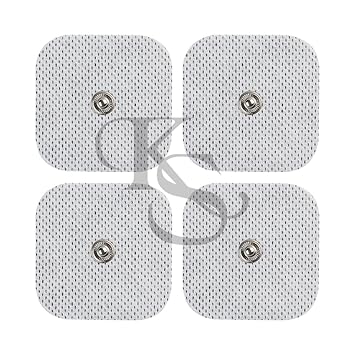
<p>The headset is made of white plastic and has two bits that hang behind your ears. You attach little sticky <a href="https://images-na.ssl-images-amazon.com/images/I/715M0njWseL._SY355_.jpg">electrode pads</a> on the back of your ears and use them to hook in the little bits. Then, you turn the gadget on and it starts sending electrical signals to your brain. There are 10 settings. At settings one and two, I didn't feel anything. At setting three, I immediately felt a tingling in the e …</p>
<p><a href="https://www.theverge.com/2018/1/9/16864374/modius-health-headset-neuroscience-weight-loss-wearables-ces-2018">Read the full story at The Verge.</a></p>
						]]>
									</content>
			
					</entry>
	</feed>