<?xml version="1.0" encoding="UTF-8"?><feed
	xmlns="http://www.w3.org/2005/Atom"
	xmlns:thr="http://purl.org/syndication/thread/1.0"
	xml:lang="en-US"
	>
	<title type="text">Intel at CES 2014: beautiful smartwatches, tiny PCs, and a headset named Jarvis &#8211; The Verge</title>
	<subtitle type="text">The Verge is about technology and how it makes us feel. Founded in 2011, we offer our audience everything from breaking news to reviews to award-winning features and investigations, on our site, in video, and in podcasts.</subtitle>

	<updated>2014-01-07T15:50:37+00:00</updated>

	<link rel="alternate" type="text/html" href="https://www.theverge.com/2014/1/6/5282474/intel-at-ces-2014" />
	<id>https://www.theverge.com/rss/stream/5046515</id>
	<link rel="self" type="application/atom+xml" href="https://www.theverge.com/rss/stream/5046515" />

	<icon>https://platform.theverge.com/wp-content/uploads/sites/2/2025/01/verge-rss-large_80b47e.png?w=150&amp;h=150&amp;crop=1</icon>
		<entry>
			
			<author>
				<name>Kwame Opam</name>
			</author>
			
			<title type="html"><![CDATA[Intel&#8217;s new smart earbuds can read your heart]]></title>
			<link rel="alternate" type="text/html" href="https://www.theverge.com/2014/1/7/5283912/hands-on-with-intels-new-heart-rate-monitoring-smart-earbuds" />
			<id>https://www.theverge.com/2014/1/7/5283912/hands-on-with-intels-new-heart-rate-monitoring-smart-earbuds</id>
			<updated>2014-01-07T10:50:37-05:00</updated>
			<published>2014-01-07T10:50:37-05:00</published>
			<category scheme="https://www.theverge.com" term="CES" /><category scheme="https://www.theverge.com" term="Hands-on" /><category scheme="https://www.theverge.com" term="Reviews" /><category scheme="https://www.theverge.com" term="Tech" />
							<summary type="html"><![CDATA[Intel CEO Brian Krzanich unveiled the chipmaker's new wearable prototypes at yesterday's keynote address. Among the reference designs was a pair of smart earbuds with biometric capabilities, designed to track the user's run, record burned calories, and read their heart rate. Intel is showing off the design at its booth at CES. The earbuds are [&#8230;]]]></summary>
			
							<content type="html">
											<![CDATA[

						
<figure>

<img alt="" data-caption="Intel smart earbuds" data-portal-copyright="" data-has-syndication-rights="1" src="https://platform.theverge.com/wp-content/uploads/sites/2/chorus/uploads/chorus_asset/file/12803869/DSC_5454.1419980226.jpg?quality=90&#038;strip=all&#038;crop=0,0,100,100" />
	<figcaption>
	Intel smart earbuds	</figcaption>
</figure>
<p>Intel CEO Brian Krzanich unveiled the chipmaker's new wearable prototypes at <a href="http://live.theverge.com/intel-ces-2014-live-blog/">yesterday's keynote address</a>. Among the reference designs was a pair of smart earbuds with biometric capabilities, designed to track the user's run, record burned calories, and read their heart rate. Intel is showing off the design at its booth at CES. The earbuds are lightweight but bulky - presumably to house all those sensors - but won't require a separate power source for a charge. Intel says that developers will also be able to develop especially for the device.</p>
<div class="image-slider">
	<div class="image-slider">
		<img src="https://platform.theverge.com/wp-content/uploads/sites/2/chorus/uploads/chorus_asset/file/2811356/DSC_5453.1389108648.jpg?quality=90&amp;strip=all&amp;crop=0,0.073421439060198,100,99.85315712188" alt="Intel Smart Earbuds hands-on photos" title="Intel Smart Earbuds hands-on photos" data-has-syndication-rights="1" data-caption="" data-portal-copyright="">
<img src="https://platform.theverge.com/wp-content/uploads/sites/2/chorus/uploads/chorus_asset/file/2811390/IMG_1312.1389112815.jpg?quality=90&amp;strip=all&amp;crop=0,0,100,100" alt="Intel Smart Earbuds hands-on photos" title="Intel Smart Earbuds hands-on photos" data-has-syndication-rights="1" data-caption="" data-portal-copyright="">
<img src="https://platform.theverge.com/wp-content/uploads/sites/2/chorus/uploads/chorus_asset/file/2811360/DSC_5457.1389109733.jpg?quality=90&amp;strip=all&amp;crop=0,0.073421439060198,100,99.85315712188" alt="Intel Smart Earbuds hands-on photos" title="Intel Smart Earbuds hands-on photos" data-has-syndication-rights="1" data-caption="" data-portal-copyright="">
<img src="https://platform.theverge.com/wp-content/uploads/sites/2/chorus/uploads/chorus_asset/file/2811358/DSC_5454.1389109496.jpg?quality=90&amp;strip=all&amp;crop=0,0.073421439060198,100,99.85315712188" alt="Intel Smart Earbuds hands-on photos" title="Intel Smart Earbuds hands-on photos" data-has-syndication-rights="1" data-caption="" data-portal-copyright="">
	</div>
</div>
<p><br id="1389109511610"></p>
<p><a href="https://www.theverge.com/2014/1/7/5283912/hands-on-with-intels-new-heart-rate-monitoring-smart-earbuds">Read the full story at The Verge.</a></p>
						]]>
									</content>
			
					</entry>
			<entry>
			
			<author>
				<name>Sean Hollister</name>
			</author>
			
			<title type="html"><![CDATA[Intel phases out McAfee brand name, distancing itself from controversial founder John McAfee]]></title>
			<link rel="alternate" type="text/html" href="https://www.theverge.com/2014/1/6/5282618/intel-phases-out-mcafee-brand-name-distancing-itself-from" />
			<id>https://www.theverge.com/2014/1/6/5282618/intel-phases-out-mcafee-brand-name-distancing-itself-from</id>
			<updated>2014-01-06T23:04:51-05:00</updated>
			<published>2014-01-06T23:04:51-05:00</published>
			<category scheme="https://www.theverge.com" term="CES" /><category scheme="https://www.theverge.com" term="Intel" /><category scheme="https://www.theverge.com" term="Tech" />
							<summary type="html"><![CDATA[When you think of McAfee, you might think of the Intel-owned antivirus software company, or you might think of the former druggie and part-time fugitive who founded that company over 20 years ago. Or perhaps both. Either way, Intel is attempting to sever that inconvenient association. At CES 2014 in Las Vegas, the company has [&#8230;]]]></summary>
			
							<content type="html">
											<![CDATA[

						
<figure>

<img alt="" data-caption="mcaffee" data-portal-copyright="" data-has-syndication-rights="1" src="https://platform.theverge.com/wp-content/uploads/sites/2/chorus/uploads/chorus_asset/file/14583210/mcafee.1419980224.png?quality=90&#038;strip=all&#038;crop=0,0,100,100" />
	<figcaption>
	mcaffee	</figcaption>
</figure>
<p>When you think of McAfee, you might think of the Intel-owned antivirus software company, or you might think of <a href="http://www.theverge.com/2012/12/12/3760192/john-mcafee-run-from-the-law">the former druggie and part-time fugitive</a> who founded that company over 20 years ago. <a href="http://www.theverge.com/2013/6/19/4444266/john-mcafee-youtube-how-to-uninstall-mcafee-antivirus">Or perhaps both</a>. Either way, Intel is attempting to sever that inconvenient association. At CES 2014 in Las Vegas, the company has announced that it will be phasing out the McAfee brand name for its security software in favor of the simpler "Intel Security." According to an Intel representative, the company named McAfee will still stick around as a wholly-owned subsidiary of Intel, but the software rebranding will begin immediately. The company est …</p>
<p><a href="https://www.theverge.com/2014/1/6/5282618/intel-phases-out-mcafee-brand-name-distancing-itself-from">Read the full story at The Verge.</a></p>
						]]>
									</content>
			
					</entry>
			<entry>
			
			<author>
				<name>Kwame Opam</name>
			</author>
			
			<title type="html"><![CDATA[Intel announces that every processor released in 2014 will be conflict mineral free]]></title>
			<link rel="alternate" type="text/html" href="https://www.theverge.com/2014/1/6/5282608/intel-announces-that-every-processor-released-in-2014-will-be" />
			<id>https://www.theverge.com/2014/1/6/5282608/intel-announces-that-every-processor-released-in-2014-will-be</id>
			<updated>2014-01-06T22:40:18-05:00</updated>
			<published>2014-01-06T22:40:18-05:00</published>
			<category scheme="https://www.theverge.com" term="CES" /><category scheme="https://www.theverge.com" term="Tech" />
							<summary type="html"><![CDATA[Intel announced today that it will no longer rely on minerals sourced from war-torn regions to produce their processors. During the keynote, CEO Brian Krzanich stepped aside to present a video discussing the minerals needed to produce the chips in everyday technology and how they're obtained. The company paid special attention to the Democratic Republic [&#8230;]]]></summary>
			
							<content type="html">
											<![CDATA[

						
<figure>

<img alt="" data-caption="intel conflict free" data-portal-copyright="" data-has-syndication-rights="1" src="https://platform.theverge.com/wp-content/uploads/sites/2/chorus/uploads/chorus_asset/file/14583207/DSC_0510.1419980224.jpg?quality=90&#038;strip=all&#038;crop=0,0,100,100" />
	<figcaption>
	intel conflict free	</figcaption>
</figure>
<p>Intel announced today that it will no longer rely on minerals sourced from war-torn regions to produce their processors. During the keynote, CEO Brian Krzanich stepped aside to present a video discussing the minerals needed to produce the chips in everyday technology and how they're obtained. The company paid special attention to the Democratic Republic of the Congo, a country whose bloody perpetual war, funded by the sale of diamonds and essential metals like tin and tungsten, has claimed millions of lives in the last 15 years. Intel ended the presentation on the difficult question of how to solve this industry-wide problem, and committed i …</p>
<p><a href="https://www.theverge.com/2014/1/6/5282608/intel-announces-that-every-processor-released-in-2014-will-be">Read the full story at The Verge.</a></p>
						]]>
									</content>
			
					</entry>
			<entry>
			
			<author>
				<name>Sean Hollister</name>
			</author>
			
			<title type="html"><![CDATA[Intel confirms Dual OS computers that run both Windows and Android]]></title>
			<link rel="alternate" type="text/html" href="https://www.theverge.com/2014/1/6/5282502/intel-confirms-dual-os-computers-that-run-both-windows-and-android" />
			<id>https://www.theverge.com/2014/1/6/5282502/intel-confirms-dual-os-computers-that-run-both-windows-and-android</id>
			<updated>2014-01-06T22:14:30-05:00</updated>
			<published>2014-01-06T22:14:30-05:00</published>
			<category scheme="https://www.theverge.com" term="CES" /><category scheme="https://www.theverge.com" term="Intel" /><category scheme="https://www.theverge.com" term="Tech" />
							<summary type="html"><![CDATA[It barely got a mention at Intel's CES 2014 press conference this evening, but Dual OS is real. The company confirmed that Intel processors will power computers that can switch between Windows and Android with the press of a button, just like the Asus Transformer Book Duet we tried earlier today. Intel demonstrated the technology [&#8230;]]]></summary>
			
							<content type="html">
											<![CDATA[

						
<figure>

<img alt="" data-caption="via d35lb3dl296zwu.cloudfront.net" data-portal-copyright="" data-has-syndication-rights="1" src="https://platform.theverge.com/wp-content/uploads/sites/2/chorus/uploads/chorus_asset/file/14583181/DSC_0409.1419980224.jpg?quality=90&#038;strip=all&#038;crop=0,0,100,100" />
	<figcaption>
	via d35lb3dl296zwu.cloudfront.net	</figcaption>
</figure>
<p>It barely got a mention at Intel's CES 2014 press conference this evening, <a href="http://www.theverge.com/2014/1/3/5267360/intel-dual-os-pc-plus-android-windows-microsoft-objection">but Dual OS is real</a>. The company confirmed that Intel processors will power computers that can switch between Windows and Android with the press of a button, just like the <a href="http://www.theverge.com/2014/1/6/5280850/asus-transformer-book-duet-hands-on-ces-2014">Asus Transformer Book Duet</a> we tried earlier today. Intel demonstrated the technology on a laptop during the company's press conference, right after introducing "Intel Device Protection Technology," an idea that should help Intel-based Android devices meet corporate standards for enterprise security.</p>
<p>Intel isn't the only company pursuing Windows and Android in the same device here at CES, however. E …</p>
<p><a href="https://www.theverge.com/2014/1/6/5282502/intel-confirms-dual-os-computers-that-run-both-windows-and-android">Read the full story at The Verge.</a></p>
						]]>
									</content>
			
					</entry>
			<entry>
			
			<author>
				<name>Sean Hollister</name>
			</author>
			
			<title type="html"><![CDATA[Intel announces Edison, a computer the size of an SD card]]></title>
			<link rel="alternate" type="text/html" href="https://www.theverge.com/2014/1/6/5282472/intel-announces-edison-a-computer-the-size-of-an-sd-card" />
			<id>https://www.theverge.com/2014/1/6/5282472/intel-announces-edison-a-computer-the-size-of-an-sd-card</id>
			<updated>2014-01-06T22:01:42-05:00</updated>
			<published>2014-01-06T22:01:42-05:00</published>
			<category scheme="https://www.theverge.com" term="CES" /><category scheme="https://www.theverge.com" term="Intel" /><category scheme="https://www.theverge.com" term="Tech" />
							<summary type="html"><![CDATA[Intel built a processor for wearable computing, and now it has a tiny computer where that processor can live. At CES 2014, Intel CEO Brian Krzanich announced Edison, "a full Pentium-class PC" that's the size and shape of the SD card you might otherwise put in your camera. It's powered by a dual-core Quark SOC, [&#8230;]]]></summary>
			
							<content type="html">
											<![CDATA[

						
<figure>

<img alt="" data-caption="intel edison quark 1020 stock press" data-portal-copyright="" data-has-syndication-rights="1" src="https://platform.theverge.com/wp-content/uploads/sites/2/chorus/uploads/chorus_asset/file/14583175/intel-edison-2-1020.1419980224.jpg?quality=90&#038;strip=all&#038;crop=0,0,100,100" />
	<figcaption>
	intel edison quark 1020 stock press	</figcaption>
</figure>
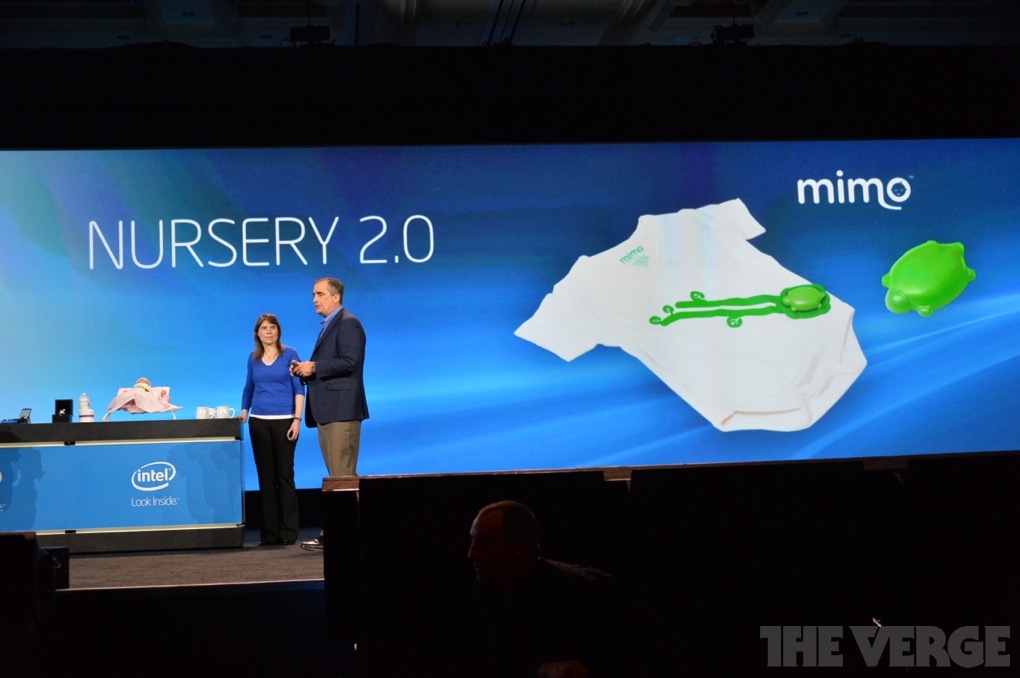
<p><a href="http://www.theverge.com/2013/9/10/4715514/intel-quark-internet-of-things-wearable-computing">Intel built a processor for wearable computing</a>, and now it has a tiny computer where that processor can live. At CES 2014, Intel CEO Brian Krzanich announced Edison, "a full Pentium-class PC" that's the size and shape of the SD card you might otherwise put in your camera. It's powered by a dual-core <a href="http://www.theverge.com/2013/9/10/4715514/intel-quark-internet-of-things-wearable-computing">Quark SOC</a>, runs Linux, and has built-in Wi-Fi and Bluetooth connectivity, according to the company. Intel even has a specific app store designed for Edison, and a special version of Wolfram that will come to the tiny computer.</p>
<p><!-- extended entry --></p><hr class="widget_boundry_marker hidden page_break"><p><a href="http://cdn0.sbnation.com/imported_assets/1998061/DSC_0378.jpg"><img alt="Dsc_0378_medium" class="photo" width="560" src="http://cdn0.sbnation.com/imported_assets/1998061/DSC_0378_medium.jpg"></a></p>
<p>To demonstrate the potential for Edison, Intel showed a concept for a "Nursery 2.0." In the concept, a baby was wearing <a href="http://mimobaby.com/mimo/"> …</a></p>
<p><a href="https://www.theverge.com/2014/1/6/5282472/intel-announces-edison-a-computer-the-size-of-an-sd-card">Read the full story at The Verge.</a></p>
						]]>
									</content>
			
					</entry>
			<entry>
			
			<author>
				<name>Ellis Hamburger</name>
			</author>
			
			<title type="html"><![CDATA[Intel partners with the fashion industry to make beautiful wearables]]></title>
			<link rel="alternate" type="text/html" href="https://www.theverge.com/2014/1/6/5282458/intel-partners-with-barneys-and-other-fashion-leaders-on-smart-wristwear" />
			<id>https://www.theverge.com/2014/1/6/5282458/intel-partners-with-barneys-and-other-fashion-leaders-on-smart-wristwear</id>
			<updated>2014-01-06T21:56:36-05:00</updated>
			<published>2014-01-06T21:56:36-05:00</published>
			<category scheme="https://www.theverge.com" term="CES" /><category scheme="https://www.theverge.com" term="Mobile" /><category scheme="https://www.theverge.com" term="Tech" />
							<summary type="html"><![CDATA[Intel just announced that in the coming year, it's partnering with fashion industry leaders like Barneys, The Council of Fashion Designers of America (the CFDA), and global fashion retailer Opening Ceremony to develop smart wristwear. The first product of the collaboration will be a smart bracelet concept powered by Intel technology and designed by Opening [&#8230;]]]></summary>
			
							<content type="html">
											<![CDATA[

						
<figure>

<img alt="" data-caption="via d35lb3dl296zwu.cloudfront.net" data-portal-copyright="" data-has-syndication-rights="1" src="https://platform.theverge.com/wp-content/uploads/sites/2/chorus/uploads/chorus_asset/file/14583171/DSC_0372.1419980224.jpg?quality=90&#038;strip=all&#038;crop=0,0,100,100" />
	<figcaption>
	via d35lb3dl296zwu.cloudfront.net	</figcaption>
</figure>
<p>Intel just <a href="http://live.theverge.com/intel-ces-2014-live-blog/">announced</a> that in the coming year, it's partnering with fashion industry leaders like Barneys, The Council of Fashion Designers of America (the CFDA), and global fashion retailer Opening Ceremony to develop smart wristwear. The first product of the collaboration will be <a href="http://download.intel.com/newsroom/kits/ces/2014/pdfs/Intel_CES2014_Wearable_Technology_Factsheet.pdf">a smart bracelet concept</a> powered by Intel technology and designed by Opening Ceremony. Barneys will carry the smart bracelet, Intel says, but there's no word on exactly what the bracelet will do. Will it bear Bluetooth and LEDs that flash when you get a text, <a href="http://www.theverge.com/2014/1/6/5276610/csr-bluetooth-jewelry-notifications-led">perhaps</a>, or NFC Swarovski crystals? We'll have to wait and see.</p>
<p>Wearable technology was one of the main the …</p>
<p><a href="https://www.theverge.com/2014/1/6/5282458/intel-partners-with-barneys-and-other-fashion-leaders-on-smart-wristwear">Read the full story at The Verge.</a></p>
						]]>
									</content>
			
					</entry>
			<entry>
			
			<author>
				<name>Kwame Opam</name>
			</author>
			
			<title type="html"><![CDATA[Intel debuts a self-sufficient Smart Watch prototype]]></title>
			<link rel="alternate" type="text/html" href="https://www.theverge.com/2014/1/6/5282130/intel-debuts-prototype-smart-watch" />
			<id>https://www.theverge.com/2014/1/6/5282130/intel-debuts-prototype-smart-watch</id>
			<updated>2014-01-06T21:55:00-05:00</updated>
			<published>2014-01-06T21:55:00-05:00</published>
			<category scheme="https://www.theverge.com" term="CES" /><category scheme="https://www.theverge.com" term="Intel" /><category scheme="https://www.theverge.com" term="Tech" />
							<summary type="html"><![CDATA[Intel CEO Brian Krzanich has announced that Intel is developing its own Smart Watch, looking to compete with the likes of Pebble and Samsung in the wearable space. Unlike its competitors, the device needn't be tethered to a smartphone to function since it has its own connectivity. It also features geofencing, allowing it to give [&#8230;]]]></summary>
			
							<content type="html">
											<![CDATA[

						
<figure>

<img alt="" data-caption="intel smart watch" data-portal-copyright="" data-has-syndication-rights="1" src="https://platform.theverge.com/wp-content/uploads/sites/2/chorus/uploads/chorus_asset/file/14583086/DSC_0360.1419980223.jpg?quality=90&#038;strip=all&#038;crop=0,0,100,100" />
	<figcaption>
	intel smart watch	</figcaption>
</figure>
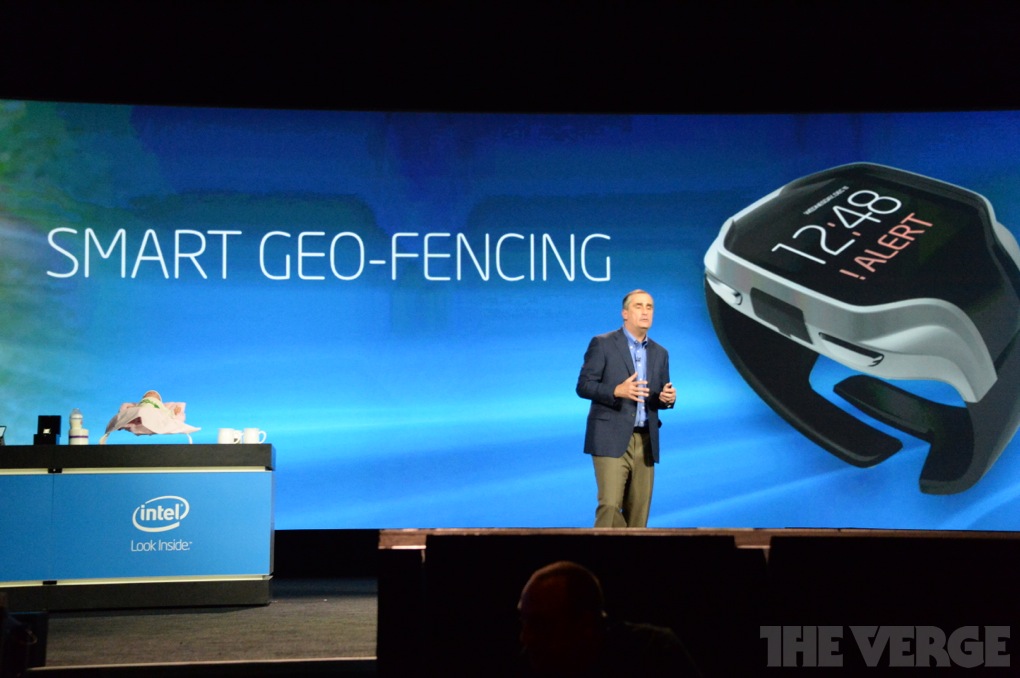
<p>Intel CEO Brian Krzanich has announced that Intel is developing its own Smart Watch, looking to compete with the likes of Pebble and Samsung in the wearable space. Unlike its competitors, the device needn't be tethered to a smartphone to function since it has its own connectivity. It also features geofencing, allowing it to give the wearer notifications based on location.</p>
<p><img height="315" width="560" src="http://cdn3.sbnation.com/assets/3824719/DSC_0366.jpg" class="photo" alt="Dsc_0366"><br id="1389064641848"></p>
<p>Intel is paying greater attention to smaller devices this year, unveiling a range of wearable reference devices at the keynote. "Wearables are not everywhere today because they aren't yet solving real problems and they aren't yet integrated with our lifestyles," said Krzan …</p>
<p><a href="https://www.theverge.com/2014/1/6/5282130/intel-debuts-prototype-smart-watch">Read the full story at The Verge.</a></p>
						]]>
									</content>
			
					</entry>
			<entry>
			
			<author>
				<name>Jacob Kastrenakes</name>
			</author>
			
			<title type="html"><![CDATA[Intel unveils &#8216;Jarvis,&#8217; its always-listening smart headset]]></title>
			<link rel="alternate" type="text/html" href="https://www.theverge.com/2014/1/6/5282416/intel-unveils-jarvis-its-smart-headset" />
			<id>https://www.theverge.com/2014/1/6/5282416/intel-unveils-jarvis-its-smart-headset</id>
			<updated>2014-01-06T21:52:31-05:00</updated>
			<published>2014-01-06T21:52:31-05:00</published>
			<category scheme="https://www.theverge.com" term="CES" /><category scheme="https://www.theverge.com" term="Intel" /><category scheme="https://www.theverge.com" term="Tech" />
							<summary type="html"><![CDATA[Intel has its own digital assistant, and it lives right inside of an earpiece. On stage at CES today, Intel unveiled Jarvis, an oddly shaped Bluetooth headset that wraps around the back of its wearer's ear. By pairing it with an Android smartphone app, Jarvis is able to remotely interact with the phone, getting directions, [&#8230;]]]></summary>
			
							<content type="html">
											<![CDATA[

						
<figure>

<img alt="" data-caption="via d35lb3dl296zwu.cloudfront.net" data-portal-copyright="" data-has-syndication-rights="1" src="https://platform.theverge.com/wp-content/uploads/sites/2/chorus/uploads/chorus_asset/file/14583158/DSC_0346.1419980224.jpg?quality=90&#038;strip=all&#038;crop=0,0,100,100" />
	<figcaption>
	via d35lb3dl296zwu.cloudfront.net	</figcaption>
</figure>
<p>Intel has its own digital assistant, and it lives right inside of an earpiece. On stage at CES today, Intel unveiled Jarvis, an oddly shaped Bluetooth headset that wraps around the back of its wearer's ear. By pairing it with an Android smartphone app, Jarvis is able to remotely interact with the phone, getting directions, looking up restaurants, and doing many of the other major functions that we've come to expect Siri and Google Now to do. Don't expect Intel to start selling it though - Jarvis is only a reference design for now, so it would be Intel's partners that take the design and turn it into a final, buyable product.</p>
<p><img src="http://cdn1.sbnation.com/imported_assets/1998037/DSC_0333_medium.jpg" class="photo" alt="Dsc_0333_medium" width="560"></p>
<p>Jarvis comes as …</p>
<p><a href="https://www.theverge.com/2014/1/6/5282416/intel-unveils-jarvis-its-smart-headset">Read the full story at The Verge.</a></p>
						]]>
									</content>
			
					</entry>
	</feed>