<?xml version="1.0" encoding="UTF-8"?><feed
	xmlns="http://www.w3.org/2005/Atom"
	xmlns:thr="http://purl.org/syndication/thread/1.0"
	xml:lang="en-US"
	>
	<title type="text">Syrian Electronic Army causes mayhem with Twitter, web hacks &#8211; The Verge</title>
	<subtitle type="text">The Verge is about technology and how it makes us feel. Founded in 2011, we offer our audience everything from breaking news to reviews to award-winning features and investigations, on our site, in video, and in podcasts.</subtitle>

	<updated>2014-02-15T20:26:58+00:00</updated>

	<link rel="alternate" type="text/html" href="https://www.theverge.com/2014/1/27/5350744/syrian-electronic-army-sea-hacks" />
	<id>https://www.theverge.com/rss/stream/5114785</id>
	<link rel="self" type="application/atom+xml" href="https://www.theverge.com/rss/stream/5114785" />

	<icon>https://platform.theverge.com/wp-content/uploads/sites/2/2025/01/verge-rss-large_80b47e.png?w=150&amp;h=150&amp;crop=1</icon>
		<entry>
			
			<author>
				<name>Casey Newton</name>
			</author>
			
			<title type="html"><![CDATA[Syrian Electronic Army hacks Forbes&#8217; website and posts user logins]]></title>
			<link rel="alternate" type="text/html" href="https://www.theverge.com/2014/2/15/5414728/syrian-electronic-army-hacks-forbes-website-and-posts-user-logins" />
			<id>https://www.theverge.com/2014/2/15/5414728/syrian-electronic-army-hacks-forbes-website-and-posts-user-logins</id>
			<updated>2014-02-15T15:26:58-05:00</updated>
			<published>2014-02-15T15:26:58-05:00</published>
			<category scheme="https://www.theverge.com" term="Business" /><category scheme="https://www.theverge.com" term="Tech" /><category scheme="https://www.theverge.com" term="Web" />
							<summary type="html"><![CDATA[In its latest breach of a highly trafficked website, the Syrian Electronic Army has published a database that it says contains login credentials for 1 million users of business publication Forbes.com. Forbes confirmed the attack Friday, but stopped short of saying how many credentials had been compromised. "Users' email addresses may have been exposed," Forbes [&#8230;]]]></summary>
			
							<content type="html">
											<![CDATA[

						
<figure>

<img alt="" data-caption="syrian electronic army" data-portal-copyright="" data-has-syndication-rights="1" src="https://platform.theverge.com/wp-content/uploads/sites/2/chorus/uploads/chorus_asset/file/14623842/0z.1419980338.png?quality=90&#038;strip=all&#038;crop=0,0,100,100" />
	<figcaption>
	syrian electronic army	</figcaption>
</figure>
<p>In its <a href="http://www.theverge.com/2014/1/27/5350744/syrian-electronic-army-sea-hacks">latest breach</a> of a highly trafficked website, the Syrian Electronic Army <a href="https://twitter.com/Official_SEA16/status/434252085597466624">has published</a> a database that it says contains login credentials for 1 million users of business publication Forbes.com. <em>Forbes</em> <a href="https://www.facebook.com/forbes/posts/10152199924227509?stream_ref=10&amp;utm_campaign=forbestwittersf&amp;utm_source=twitter&amp;utm_medium=social">confirmed the attack Friday</a>, but stopped short of saying how many credentials had been compromised. "Users' email addresses may have been exposed," <em>Forbes</em> wrote. "The passwords were encrypted, but as a precaution, we strongly encourage Forbes readers and contributors to change their passwords on our system, and encourage them to change them on other websites if they use the same password elsewhere."</p>
<p>It's unclear how the SEA gained access …</p>
<p><a href="https://www.theverge.com/2014/2/15/5414728/syrian-electronic-army-hacks-forbes-website-and-posts-user-logins">Read the full story at The Verge.</a></p>
						]]>
									</content>
			
					</entry>
			<entry>
			
			<author>
				<name>Tom Warren</name>
			</author>
			
			<title type="html"><![CDATA[Microsoft: documents were stolen during recent employee email hack]]></title>
			<link rel="alternate" type="text/html" href="https://www.theverge.com/2014/1/25/5344132/microsoft-documents-stolen-during-recent-hack" />
			<id>https://www.theverge.com/2014/1/25/5344132/microsoft-documents-stolen-during-recent-hack</id>
			<updated>2014-01-25T06:14:55-05:00</updated>
			<published>2014-01-25T06:14:55-05:00</published>
			<category scheme="https://www.theverge.com" term="Microsoft" /><category scheme="https://www.theverge.com" term="Tech" />
							<summary type="html"><![CDATA[Microsoft has revealed this week that documents "associated with law enforcement inquiries" were stolen during recent attacks on employee email accounts. The software giant has been the subject of a recent campaign by the Syrian Electronic Army to compromise Microsoft email and social media accounts. While Microsoft previously confirmed the Syrian Electronic Army had been [&#8230;]]]></summary>
			
							<content type="html">
											<![CDATA[

						
<figure>

<img alt="" data-caption="New Microsoft Logo stock" data-portal-copyright="" data-has-syndication-rights="1" src="https://platform.theverge.com/wp-content/uploads/sites/2/chorus/uploads/chorus_asset/file/14601801/microsoftlogostock1_640.1419980281.jpg?quality=90&#038;strip=all&#038;crop=0,0,100,100" />
	<figcaption>
	New Microsoft Logo stock	</figcaption>
</figure>
<p class="p1">Microsoft has revealed this week that documents "associated with law enforcement inquiries" were stolen during recent attacks on employee email accounts. The software giant has been the subject of a recent campaign by the Syrian Electronic Army to compromise Microsoft email and social media accounts. While <a href="http://www.theverge.com/2014/1/15/5312798/microsoft-email-accounts-hacked-syrian-electronic-army">Microsoft previously confirmed</a> the Syrian Electronic Army had been able to breach a "small number" of employee email accounts, a further warning was issued yesterday.</p><!-- extended entry --><hr class="widget_boundry_marker hidden page_break"><p><q class="right">"It appears that documents associated with law enforcement inquiries were stolen."</q></p><p class="p2">"While our investigation continues, we have learned that there was unauthorized access to cert …</p>
<p><a href="https://www.theverge.com/2014/1/25/5344132/microsoft-documents-stolen-during-recent-hack">Read the full story at The Verge.</a></p>
						]]>
									</content>
			
					</entry>
			<entry>
			
			<author>
				<name>Tom Warren</name>
			</author>
			
			<title type="html"><![CDATA[Microsoft&#8217;s Office blog hacked by the Syrian Electronic Army hours after redesign]]></title>
			<link rel="alternate" type="text/html" href="https://www.theverge.com/2014/1/20/5328604/microsoft-office-blog-hacked-by-the-syrian-electronic-army" />
			<id>https://www.theverge.com/2014/1/20/5328604/microsoft-office-blog-hacked-by-the-syrian-electronic-army</id>
			<updated>2014-01-20T17:15:16-05:00</updated>
			<published>2014-01-20T17:15:16-05:00</published>
			<category scheme="https://www.theverge.com" term="Microsoft" /><category scheme="https://www.theverge.com" term="Tech" />
							<summary type="html"><![CDATA[The Syrian Electronic Army promised more attacks on Microsoft, and the hacking group is following through with its threat today. Just hours after Microsoft unveiled a redesigned Office blog, the SEA hacked and defaced the site multiple times. Several articles appeared on the site with the title "hacked by the Syrian Electronic Army," before being [&#8230;]]]></summary>
			
							<content type="html">
											<![CDATA[

						
<figure>

<img alt="" data-caption="microsoft office stock" data-portal-copyright="" data-has-syndication-rights="1" src="https://platform.theverge.com/wp-content/uploads/sites/2/chorus/uploads/chorus_asset/file/14597026/microsoftofficestock.1419980269.jpg?quality=90&#038;strip=all&#038;crop=0,0,100,100" />
	<figcaption>
	microsoft office stock	</figcaption>
</figure>
<p class="p1">The Syrian Electronic Army <a href="http://www.theverge.com/2014/1/15/5312798/microsoft-email-accounts-hacked-syrian-electronic-army">promised more attacks</a> on Microsoft, and the hacking group is following through with its threat today. Just hours after Microsoft unveiled a redesigned Office blog, the SEA hacked and defaced the site multiple times. Several articles appeared on the site with the title "hacked by the Syrian Electronic Army," before being removed. The group's official Twitter account acknowledged the attack with <a href="https://twitter.com/Official_SEA16/status/425382188025012224" target="_blank">screenshots of the administration panel</a> for the Office blog, before <a href="https://twitter.com/Official_SEA16/status/425385478909476865" target="_blank">taunting Microsoft</a> that "changing the CMS will not help you if your employees are hacked and they don't know about that."</p><p class="p2">The latest attack comes just days aft …</p>
<p><a href="https://www.theverge.com/2014/1/20/5328604/microsoft-office-blog-hacked-by-the-syrian-electronic-army">Read the full story at The Verge.</a></p>
						]]>
									</content>
			
					</entry>
			<entry>
			
			<author>
				<name>Tom Warren</name>
			</author>
			
			<title type="html"><![CDATA[Microsoft confirms Syrian Electronic Army hacked into employee email accounts]]></title>
			<link rel="alternate" type="text/html" href="https://www.theverge.com/2014/1/15/5312798/microsoft-email-accounts-hacked-syrian-electronic-army" />
			<id>https://www.theverge.com/2014/1/15/5312798/microsoft-email-accounts-hacked-syrian-electronic-army</id>
			<updated>2014-01-15T16:35:51-05:00</updated>
			<published>2014-01-15T16:35:51-05:00</published>
			<category scheme="https://www.theverge.com" term="Microsoft" /><category scheme="https://www.theverge.com" term="Tech" />
							<summary type="html"><![CDATA[Microsoft has confirmed to The Verge that a "small number" of employee email accounts were accessed during the latest round of attacks by the Syrian Electronic Army. The hacking group posted three internal emails that appear to have been obtained from several Microsoft employee's Outlook Web Access accounts. The emails mainly discuss the latest compromises [&#8230;]]]></summary>
			
							<content type="html">
											<![CDATA[

						
<figure>

<img alt="" data-caption="New Microsoft Logo stock" data-portal-copyright="" data-has-syndication-rights="1" src="https://platform.theverge.com/wp-content/uploads/sites/2/chorus/uploads/chorus_asset/file/14592142/microsoftlogostock1_640.1419980258.jpg?quality=90&#038;strip=all&#038;crop=0,0,100,100" />
	<figcaption>
	New Microsoft Logo stock	</figcaption>
</figure>
<p class="p1">Microsoft has confirmed to <em>The Verge</em> that a "small number" of employee email accounts were accessed during the latest round of attacks by the Syrian Electronic Army. The hacking group <a href="https://twitter.com/Official_SEA16/status/422181130368864256" target="_blank">posted</a> three <a href="https://twitter.com/Official_SEA16/status/422166025316999168" target="_blank">internal emails</a> that appear to have been obtained from several <a href="https://twitter.com/Official_SEA16/status/422099852948824064" target="_blank">Microsoft employee's Outlook Web Access</a> accounts. The emails mainly discuss the latest compromises of several Microsoft-owned Twitter accounts, but they do show that the Syrian Electronic Army (SEA) gained much greater access beyond just social network accounts.</p><p class="p2">"A social engineering cyberattack method known as phishing resulted in a small number of Microsoft employee social media and ema …</p>
<p><a href="https://www.theverge.com/2014/1/15/5312798/microsoft-email-accounts-hacked-syrian-electronic-army">Read the full story at The Verge.</a></p>
						]]>
									</content>
			
					</entry>
			<entry>
			
			<author>
				<name>Sean Hollister</name>
			</author>
			
			<title type="html"><![CDATA[Syrian Electronic Army hijacks Microsoft blog and Twitter account]]></title>
			<link rel="alternate" type="text/html" href="https://www.theverge.com/2014/1/11/5299716/syrian-electronic-army-hijacks-microsoft-blog-and-twitter-account-for" />
			<id>https://www.theverge.com/2014/1/11/5299716/syrian-electronic-army-hijacks-microsoft-blog-and-twitter-account-for</id>
			<updated>2014-01-11T20:25:24-05:00</updated>
			<published>2014-01-11T20:25:24-05:00</published>
			<category scheme="https://www.theverge.com" term="Microsoft" /><category scheme="https://www.theverge.com" term="Tech" />
							<summary type="html"><![CDATA[On New Year's Day, the Syrian Electronic Army hacked Skype's Twitter account and its official Microsoft blog, allegedly in order to warn people away from Microsoft's email services. Today, the hackers appear to be at it again. This morning, they broke into the Microsoft News Twitter account, and now they've hijacked the entire Official Microsoft [&#8230;]]]></summary>
			
							<content type="html">
											<![CDATA[

						
<figure>

<img alt="" data-caption="sea microsoft 640" data-portal-copyright="" data-has-syndication-rights="1" src="https://platform.theverge.com/wp-content/uploads/sites/2/chorus/uploads/chorus_asset/file/14588202/sea-microsoft.1419980248.jpg?quality=90&#038;strip=all&#038;crop=0,0,100,100" />
	<figcaption>
	sea microsoft 640	</figcaption>
</figure>
<p>On New Year's Day, the Syrian Electronic Army <a href="http://www.theverge.com/2014/1/1/5264540/skype-twitter-facebook-blog-accounts-hacked">hacked Skype's Twitter account and its official Microsoft blog</a>, allegedly in order to warn people away from Microsoft's email services. Today, the hackers appear to be at it again. This morning, they <a href="https://twitter.com/Official_SEA16/status/422093475224371201">broke into the Microsoft News Twitter account</a>, and now they've hijacked the entire Official Microsoft Blog, turning it into a giant automatic redirect to their own propaganda website.</p>
<blockquote lang="en" class="twitter-tweet"> <p>The Official Microsoft Blog: Syrian Electronic Army Was Here <a href="https://twitter.com/search?q=%23SEA&amp;src=hash">#SEA</a> <a href="http://t.co/CzYH5jMrY8">pic.twitter.com/CzYH5jMrY8</a></p>- SyrianElectronicArmy (@Official_SEA16) <a href="https://twitter.com/Official_SEA16/statuses/422157215194021888">January 12, 2014</a> </blockquote><p></p>
<p>On New Year's Day, when many Microsoft support employees were likel …</p>
<p><a href="https://www.theverge.com/2014/1/11/5299716/syrian-electronic-army-hijacks-microsoft-blog-and-twitter-account-for">Read the full story at The Verge.</a></p>
						]]>
									</content>
			
					</entry>
			<entry>
			
			<author>
				<name>Tom Warren</name>
			</author>
			
			<title type="html"><![CDATA[Skype Twitter account hacked, anti-Microsoft status retweeted more than 8,000 times]]></title>
			<link rel="alternate" type="text/html" href="https://www.theverge.com/2014/1/1/5264540/skype-twitter-facebook-blog-accounts-hacked" />
			<id>https://www.theverge.com/2014/1/1/5264540/skype-twitter-facebook-blog-accounts-hacked</id>
			<updated>2014-01-01T18:25:50-05:00</updated>
			<published>2014-01-01T18:25:50-05:00</published>
			<category scheme="https://www.theverge.com" term="Microsoft" /><category scheme="https://www.theverge.com" term="Tech" /><category scheme="https://www.theverge.com" term="Twitter - X" /><category scheme="https://www.theverge.com" term="Web" />
							<summary type="html"><![CDATA[Skype is starting 2014 with a security issue of its own. It appears the official Skype Twitter account has been compromised by the Syrian Electronic Army. The hacking group has taken over the account today, posting several tweets in what appears to be a classic case of phishing. The most recent fake tweet advises Skype's [&#8230;]]]></summary>
			
							<content type="html">
											<![CDATA[

						
<figure>

<img alt="" data-caption="Skype Windows 8 stock" data-portal-copyright="" data-has-syndication-rights="1" src="https://platform.theverge.com/wp-content/uploads/sites/2/chorus/uploads/chorus_asset/file/14577849/skypwin8_640.1419980203.jpg?quality=90&#038;strip=all&#038;crop=0,0,100,100" />
	<figcaption>
	Skype Windows 8 stock	</figcaption>
</figure>
<p class="p1">Skype is starting 2014 with a security issue of its own. It appears the official Skype Twitter account has been compromised by the Syrian Electronic Army. The hacking group has taken over the account today, posting several tweets in what appears to be a classic case of phishing. The <a target="_blank" href="https://twitter.com/Skype/status/418495453471068161">most recent fake tweet</a> advises Skype's 3 million followers to avoid Microsoft's email services. "Don't use Microsoft emails (hotmail,outlook), they are monitoring your accounts and selling the data to the governments. More details soon #SEA."</p><p class="p1">The tweet in question has been retweeted more than 8,000 times, and has remained online and accessible for more than two hou …</p>
<p><a href="https://www.theverge.com/2014/1/1/5264540/skype-twitter-facebook-blog-accounts-hacked">Read the full story at The Verge.</a></p>
						]]>
									</content>
			
					</entry>
			<entry>
			
			<author>
				<name>Adrianne Jeffries</name>
			</author>
			
			<title type="html"><![CDATA[The Syrian Electronic Army is allegedly conducting a live interview right now]]></title>
			<link rel="alternate" type="text/html" href="https://www.theverge.com/2013/12/11/5200832/the-syrian-electronic-army-is-allegedly-conducting-a-live-interview-matthew-keys" />
			<id>https://www.theverge.com/2013/12/11/5200832/the-syrian-electronic-army-is-allegedly-conducting-a-live-interview-matthew-keys</id>
			<updated>2013-12-11T14:31:58-05:00</updated>
			<published>2013-12-11T14:31:58-05:00</published>
			<category scheme="https://www.theverge.com" term="Verge Archives" />
							<summary type="html"><![CDATA[One of the core members of the hacker collective known as the Syrian Electronic Army (SEA) is allegedly conducting a live interview via instant message right now. The discussion with hacker "Th3Pr0" is being moderated by Matthew Keys, the former deputy social media editor at Reuters who was indicted for conspiring with members of the [&#8230;]]]></summary>
			
							<content type="html">
											<![CDATA[

						
<figure>

<img alt="" data-caption="syrian electronic army" data-portal-copyright="" data-has-syndication-rights="1" src="https://platform.theverge.com/wp-content/uploads/sites/2/chorus/uploads/chorus_asset/file/14557450/0z.1419980159.png?quality=90&#038;strip=all&#038;crop=0,0,100,100" />
	<figcaption>
	syrian electronic army	</figcaption>
</figure>
<p>One of the core members of the hacker collective known as the Syrian Electronic Army (SEA) is allegedly conducting a <a href="http://thedesk.matthewkeys.net/2013/12/11/a-live-conversation-with-the-syrian-electronic-army/">live interview</a> via instant message right now.</p>
<p>The discussion with hacker "Th3Pr0" is being moderated by Matthew Keys, the former deputy social media editor at Reuters who was indicted for conspiring with members of the hacker group Anonymous (he's <a href="http://www.huffingtonpost.com/2013/03/20/matthew-keys-denies-charges-anonymous_n_2919536.html">denied</a> the charges). The audience is invited to ask questions.</p>
<p>Keys says the SEA, which is credited with targeting media organizations from Twitter to <em>The Guardian</em>, is composed of four young students angered by media stories about the conflict in Syria. Reporting by <em>The Verge</em> sugge …</p>
<p><a href="https://www.theverge.com/2013/12/11/5200832/the-syrian-electronic-army-is-allegedly-conducting-a-live-interview-matthew-keys">Read the full story at The Verge.</a></p>
						]]>
									</content>
			
					</entry>
			<entry>
			
			<author>
				<name>Adi Robertson</name>
			</author>
			
			<title type="html"><![CDATA[Hijacked link sends Barack Obama&#8217;s Twitter followers to Syrian propaganda]]></title>
			<link rel="alternate" type="text/html" href="https://www.theverge.com/2013/10/28/5039056/president-barack-obama-twitter-links-hijacked-by-syrian-electronic-army" />
			<id>https://www.theverge.com/2013/10/28/5039056/president-barack-obama-twitter-links-hijacked-by-syrian-electronic-army</id>
			<updated>2013-10-28T14:17:53-04:00</updated>
			<published>2013-10-28T14:17:53-04:00</published>
			<category scheme="https://www.theverge.com" term="Verge Archives" />
							<summary type="html"><![CDATA[Yesterday, President Barack Obama posted an article on his Twitter account: "Science fair nightmare: This #climate change denier is the world's most embarrassing dad," he wrote. But the attached link didn't go to his campaign site. Instead, it directed readers alternately to an apparent malware site and a propaganda video called "Syria Facing Terrorism." It [&#8230;]]]></summary>
			
							<content type="html">
											<![CDATA[

						
<figure>

<img alt="" data-caption="obama plane ipad" data-portal-copyright="" data-has-syndication-rights="1" src="https://platform.theverge.com/wp-content/uploads/sites/2/chorus/uploads/chorus_asset/file/14505337/6857418974_8547bc5166_b.1419980035.jpeg?quality=90&#038;strip=all&#038;crop=0,0,100,100" />
	<figcaption>
	obama plane ipad	</figcaption>
</figure>
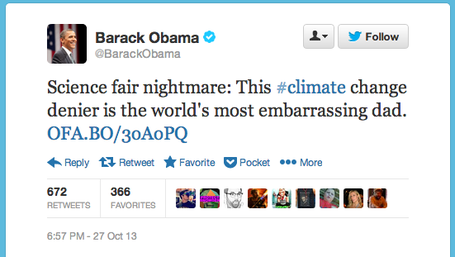
<p>Yesterday, President Barack Obama posted an article on his Twitter account: "Science fair nightmare: This #climate change denier is the world's most embarrassing dad," he wrote. But the attached link didn't go to his campaign site. Instead, it directed readers alternately to an apparent malware site and a <a href="http://www.youtube.com/watch?v=kN2kHth_tFw&amp;feature=youtu.be">propaganda video</a> called "Syria Facing Terrorism." It appeared that the Syrian Electronic Army had claimed another victim, all the way at the top of the US government.</p>
<p><img alt="52400_medium" class="photo" src="http://cdn3.sbnation.com/imported_assets/1885523/52400_medium.png"></p>
<p>But the problem didn't seem to be a full account hack. Instead, someone had used Obama's URL shortener to hijack the link, directing it to the video and site. <a href="https://twitter.com/samsteinhp/status/394886490708512768"><em>Huffington Post</em> …</a></p>
<p><a href="https://www.theverge.com/2013/10/28/5039056/president-barack-obama-twitter-links-hijacked-by-syrian-electronic-army">Read the full story at The Verge.</a></p>
						]]>
									</content>
			
					</entry>
			<entry>
			
			<author>
				<name>Adi Robertson</name>
			</author>
			
			<title type="html"><![CDATA[Syrian Electronic Army hacks recruiting site, tells Marines to refuse orders from &#8216;traitor&#8217; Obama]]></title>
			<link rel="alternate" type="text/html" href="https://www.theverge.com/2013/9/2/4686848/syrian-electronic-army-hacks-marines-recruiting-site" />
			<id>https://www.theverge.com/2013/9/2/4686848/syrian-electronic-army-hacks-marines-recruiting-site</id>
			<updated>2013-09-02T15:07:29-04:00</updated>
			<published>2013-09-02T15:07:29-04:00</published>
			<category scheme="https://www.theverge.com" term="Tech" /><category scheme="https://www.theverge.com" term="Web" />
							<summary type="html"><![CDATA[As the US moves closer to a military strike against Syrian President Bashar al-Assad, the pro-Assad Syrian Electronic Army has made one of its most obvious political statements yet. Earlier today, the group successfully defaced the Marines.com recruiting website, posting a plea for service members to refuse any orders to attack Syrian government forces. "Obama [&#8230;]]]></summary>
			
							<content type="html">
											<![CDATA[

						
<figure>

<img alt="" data-caption="via s.wsj.net" data-portal-copyright="" data-has-syndication-rights="1" src="https://platform.theverge.com/wp-content/uploads/sites/2/chorus/uploads/chorus_asset/file/14441676/OB-YT238_SEA_G_20130902103941.1419979865.jpg?quality=90&#038;strip=all&#038;crop=0,0,100,100" />
	<figcaption>
	via s.wsj.net	</figcaption>
</figure>
<p>As the US moves closer to a military strike against Syrian President Bashar al-Assad, the pro-Assad Syrian Electronic Army has made one of its most obvious political statements yet. Earlier today, the group successfully defaced the <a href="http://www.marines.com/home">Marines.com</a> recruiting website, posting a plea for service members to refuse any orders to attack Syrian government forces. "Obama is a traitor who wants to put your lives in danger to rescue al-Qaeda insurgents," the page read earlier today, as shown in <a href="http://blogs.wsj.com/washwire/2013/09/02/syrian-electronic-army-hacks-marines-website/">a screenshot from <em>The Wall Street Journal</em></a>. "The Syrian army should be your ally not your enemy. Refuse your orders and concentrate on the real reason every soldie …</p>
<p><a href="https://www.theverge.com/2013/9/2/4686848/syrian-electronic-army-hacks-marines-recruiting-site">Read the full story at The Verge.</a></p>
						]]>
									</content>
			
					</entry>
			<entry>
			
			<author>
				<name>Russell Brandom</name>
			</author>
			
			<title type="html"><![CDATA[New York Times and Twitter hack traced back to a single phishing email]]></title>
			<link rel="alternate" type="text/html" href="https://www.theverge.com/2013/8/28/4668346/new-york-times-twitter-hack-linked-to-phishing-email-syrian-electronic-army" />
			<id>https://www.theverge.com/2013/8/28/4668346/new-york-times-twitter-hack-linked-to-phishing-email-syrian-electronic-army</id>
			<updated>2013-08-28T14:24:41-04:00</updated>
			<published>2013-08-28T14:24:41-04:00</published>
			<category scheme="https://www.theverge.com" term="Tech" /><category scheme="https://www.theverge.com" term="Twitter - X" />
							<summary type="html"><![CDATA[The dust is still settling from yesterday's attacks on Twitter and the New York Times, but observers have already gained valuable insight into the methods that made the hacks possible. The LA Times is reporting that the hacks originated with a phishing email sent by the Syrian Electronic Army to the CTO of MelbourneIT, the [&#8230;]]]></summary>
			
							<content type="html">
											<![CDATA[

						
<figure>

<img alt="" data-caption="syrian electronic army" data-portal-copyright="" data-has-syndication-rights="1" src="https://platform.theverge.com/wp-content/uploads/sites/2/chorus/uploads/chorus_asset/file/14435738/0z.1419979850.png?quality=90&#038;strip=all&#038;crop=0,0,100,100" />
	<figcaption>
	syrian electronic army	</figcaption>
</figure>
<p>The dust is still settling from yesterday's attacks on <a href="http://www.theverge.com/2013/8/27/4665562/syrian-electronic-army-also-targets-twitter-with-latest-hack">Twitter</a> and <a href="http://www.theverge.com/2013/8/27/4665230/new-york-times-website-taken-down-sea-suspected">the <em>New York Times</em></a>, but observers have already gained valuable insight into the methods that made the hacks possible. <a href="http://www.latimes.com/business/technology/la-fi-tn-melbourne-it-discovers-breach-that-took-down-nytimescom-20130827,0,7651273.story">The<em> LA Times</em></a> is reporting that the hacks originated with a phishing email sent <a href="http://www.theverge.com/2013/5/24/4363140/syrian-electronic-army-hackers">by the Syrian Electronic Army</a> to the CTO of MelbourneIT, the DNS registrar for both Twitter and the <em>New York Times</em>. The emails were convincing enough to trick one of Melbourne's resellers into giving up login credentials, which gave the hackers a crucial opening. From there, they were able to acquire the credentials of one of MelbourneIT's resellers, and go to work redirecting NYTim …</p>
<p><a href="https://www.theverge.com/2013/8/28/4668346/new-york-times-twitter-hack-linked-to-phishing-email-syrian-electronic-army">Read the full story at The Verge.</a></p>
						]]>
									</content>
			
					</entry>
	</feed>