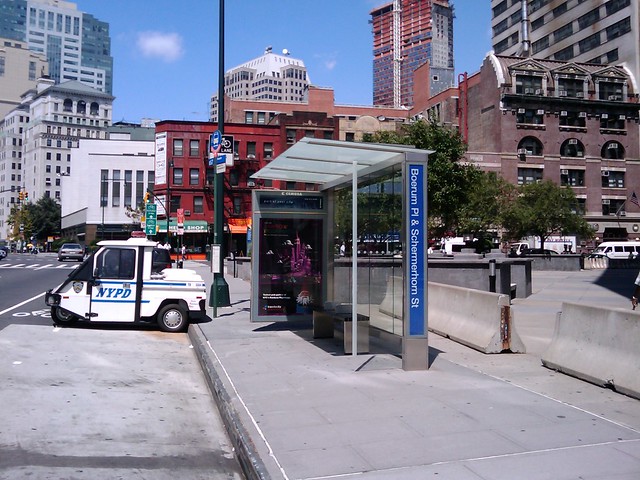
A recent location-based campaign has tied physical ads to virtual ones. People waiting for the bus or other public transportation in New York, San Francisco, and Chicago from Feb 20 to March 6 saw standard poster ads for Gap clothing stores. When they opened Words with Friends, they saw another ad offering a coupon — this one triggered by being inside a “geofenced” area around the poster. According to Gap and Titan, which managed the campaign, the mobile ads had an average 0.93 clickthrough rate, several times the standard mobile rate of 0.2 percent.
Gap ‘geofencing’ campaign puts super-localized ads on your phone
A recent Gap ad campaign served location-based ads to ‘Words with Friends’ users in close proximity to physical Gap advertisements using a system called ‘geofencing.’
A recent Gap ad campaign served location-based ads to ‘Words with Friends’ users in close proximity to physical Gap advertisements using a system called ‘geofencing.’

is a senior tech and policy editor focused on online platforms and free expression. Adi has covered virtual and augmented reality, the history of computing, and more for The Verge since 2011.
Most ads for brick-and-mortar stores are location-based to some extent, but this campaign is more granular than most, activating only within a very specific area. In this case, it’s being used to enhance the effectiveness of standard offline ads, but we could easily see geofencing being used in hyper-local advertising — say, by offering a discount at a nearby store. Of course, more potentially invasive uses — like building a rough profile of where you’re regularly using your phone and serving ads based on it — are also possible.
Follow topics and authors from this story to see more like this in your personalized homepage feed and to receive email updates.