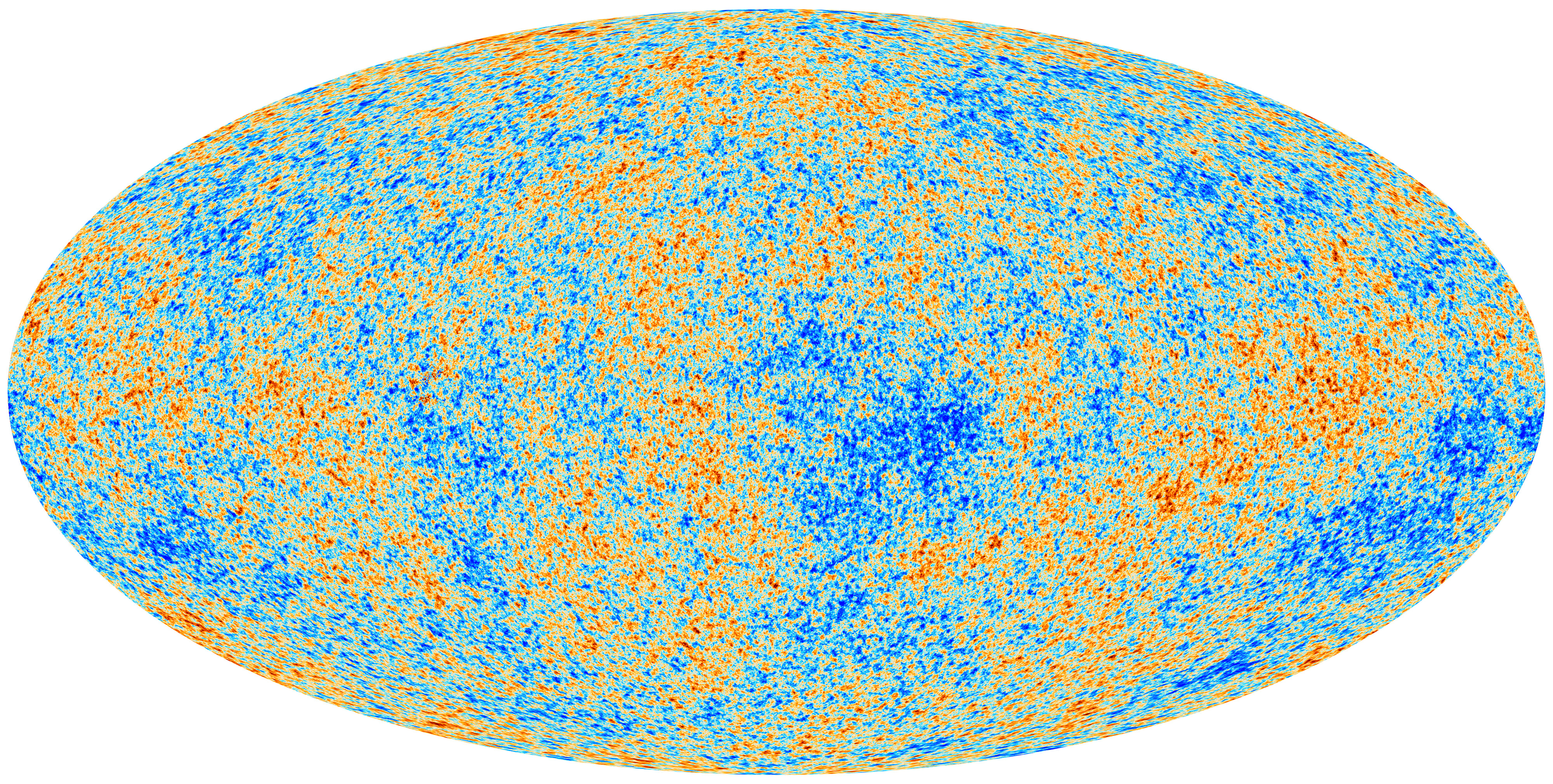
Though the Big Bang took place long before anyone was around to observe it, we’ve known for years what it might have sounded like. As the universe expanded, scientists believe it produced waves of sound that echoed through the dense plasma and hydrogen that then filled it. These waves are obviously no longer audible, but it’s possible to simulate them: NASA probes collect information on cosmic background radiation, which was shaped by the sound so that some areas still remain hotter or colder. In 2003, Professor Emeritus John Cramer mapped those variations into a sound file, producing a widely-heard 100-second “recording” of the Big Bang. Ten years later, he’s back with another “high fidelity” version.
New space probe data gives us a ‘high fidelity’ simulation of how the Big Bang sounded

is a senior tech and policy editor focused on online platforms and free expression. Adi has covered virtual and augmented reality, the history of computing, and more for The Verge since 2011.
Cramer based his 2003 interpretation of the Big Bang’s sound on data from NASA’s Wilkinson Microwave Anisotropy Probe (WMAP). This time, though, he opted for the European Space Agency’s Planck mission, which recently released a new and more precise map of cosmic microwaves. That map can be seen above; ESA scientists have pointed to several small anomalies that could require us to rethink how the universe developed.
The new sound file is based on temperature fluctuations mapped on an ESA graph; after manually recording each of the data points, Cramer created a monaural sound wave following the frequency spectrum, then adjusted it to account for how the sound would have changed as the universe stretched, “becoming more of a ‘bass instrument.’” As a last step, he scaled it upwards to create a sound that could be heard by the human ear. The 100-second clip above is one of several he created to map the first 760,000 years of the universe; other lengths can be found on his website.
Follow topics and authors from this story to see more like this in your personalized homepage feed and to receive email updates.