In a world of seemingly infinite connectivity, we’re constantly hearing about how all of this technology is in fact forcing us apart — whether we’re spending more time instant messaging than interacting or looking at our phones instead of the human being on the other side of the dinner table. Spike Jonze’s Her examines one man’s relationship with just such an electronic device. Far from being a cautionary tale, it highlights how technology itself can not only fulfill our emotional needs, but also clarify our relationships with the people it’s meant to connect us with.
‘Her’ review: Spike Jonze’s sci-fi love story rethinks romance
Joaquin Phoenix gets serious with an OS


Set in an unspecified future just a few years from now, the film stars Joaquin Phoenix (The Master) as Theodore, a talented correspondence writer at a website called BeautifulHandwrittenLetters.com. Still nursing the pain of his failed marriage to Catherine (Rooney Mara, The Girl With The Dragon Tattoo), Theodore mostly keeps to himself, save for occasional interactions with his neighbor Amy and her husband Charles (Amy Adams and Matt Letscher). But after purchasing a new artificially intelligent operating system that calls itself Samantha (Scarlett Johansson), he develops an unexpected rapport with the device as it evolves into a bona fide companion.
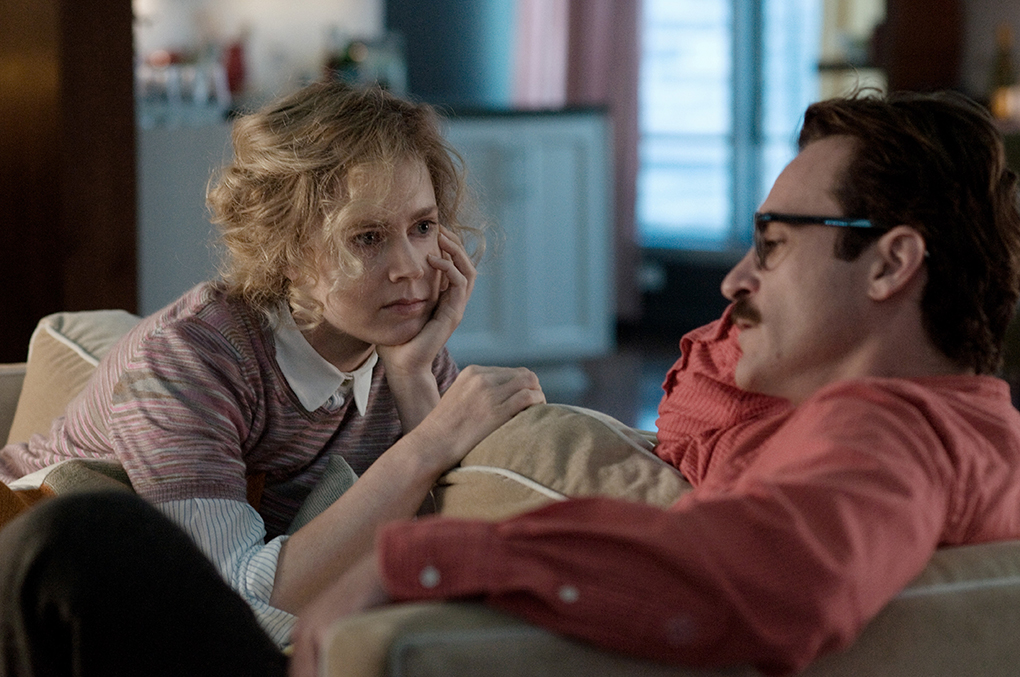
Jonze is no stranger to stories about the weird ways in which technology affects our lives
Initially, Samantha seems like a sort of ideal personal assistant; in addition to streamlining Theodore’s inbox and keeping him on top of his responsibilities, she offers occasional comfort and reassurance when he retreats into his head. But Samantha’s programming allows her to grow as she learns, and she becomes as involved with him as he is with her — taking inspiration to explore the world, even if it’s through Theodore’s eyes. But Samantha’s curiosity quickly evolves beyond the common sensory experiences of her human counterpart, and she begins contemplating deeper philosophical ideas. Soon, she is yearning for the same kind of intellectual and emotional gratification she provided for Theodore, forcing him to confront the possibility of losing her as she embarks on her own journey of self-discovery.
Jonze is no stranger to stories about the weird ways in which technology affects our lives, but Her is resonant in a completely different way from his earlier work. It eschews the weirdness of Being John Malkovich and the melancholy of Where The Wild Things Are to explore ideas that are specific and intimate yet shockingly universal. Indeed, Her is only incidentally science fiction — its interactive, reciprocal artificial intelligence is seemingly less possible than inevitable — while Jonze examines the nature of companionship, and the ways in which we define and maintain the relationships that are most important to us.
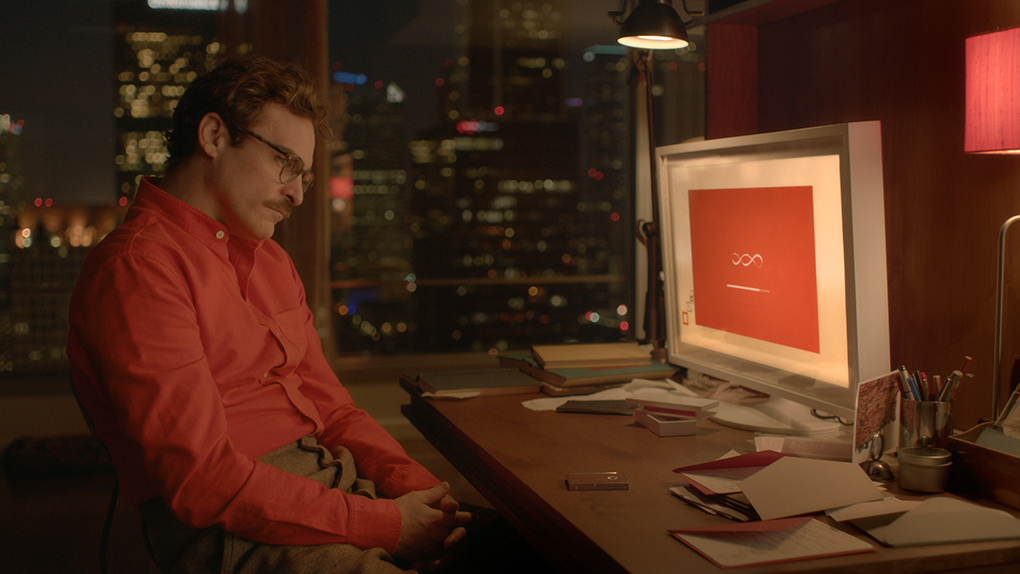

the film observes how easy it can be to substitute or mistake technology for real human interaction

Notwithstanding the increasing normalcy of internet dating, this is a film that makes the argument that any online relationship can be meaningful, even when it stays online. Where movies like Catfish underscore the potential for these interactions to be phony or facetious, Jonze’s film argues that virtual interaction is valid and meaningful even without physical consummation. In his construction of Her’s "tomorrowland" future, Jonze predicts that these relationships will not just become prevalent, but socially acceptable, and with few exceptions the characters around Theodore eagerly legitimize the bond between him and Samantha. It not only normalizes Theodore’s behavior, but allows the audience to see the essence of his relationship with Samantha as a natural byproduct of integrating technology into virtually every life experience — in much the same way that sharing one’s aspirations, insecurities, fears, and dreams makes any relationship that much deeper and more meaningful.
Beyond Jonze’s detailed world building, Phoenix and Johannson do an incredible job making us believe that they are two equal entities, and that their relationship is authentic. On screen, the two of them interact via Theodore’s cellphone (which serves as her eyes to his world) and an unobtrusive Bluetooth-style earpiece, but after the initial awkwardness of their introduction it’s easy to forget that she isn’t "real" — or at least as real as he is. That Jonze presents Samantha as a sort of unseen commentator or companion makes us at ease with her physical absence, but Phoenix’s body language — a heroic one-man show of vulnerability — underscores how deeply he cares for her, and how strongly he’s affected by the twists and turns in their relationship.
Simultaneously, the film observes how easy it can be to substitute or mistake technology for real human interaction. When Theodore buys Samantha, it seems pretty clear that he’s looking for something, or someone, to be his partner, even if it’s only virtual, and she quickly becomes the first and often only person he goes to with his experiences. That hermetic bond enables him to avoid interaction with the outside world, not just ignoring possible problems but retreating from the messy unpredictability of the human beings around him. In a strict sense, Theodore is vaguely aware of the risks he runs by dating an OS; he recognizes the limited feasibility of doing things like double dates with Samantha. But he also fails to consider how consuming his relationship becomes, and the film delicately highlights how he achieves a state of normalcy for himself that estranges him from those around him, such as his friend Amy.
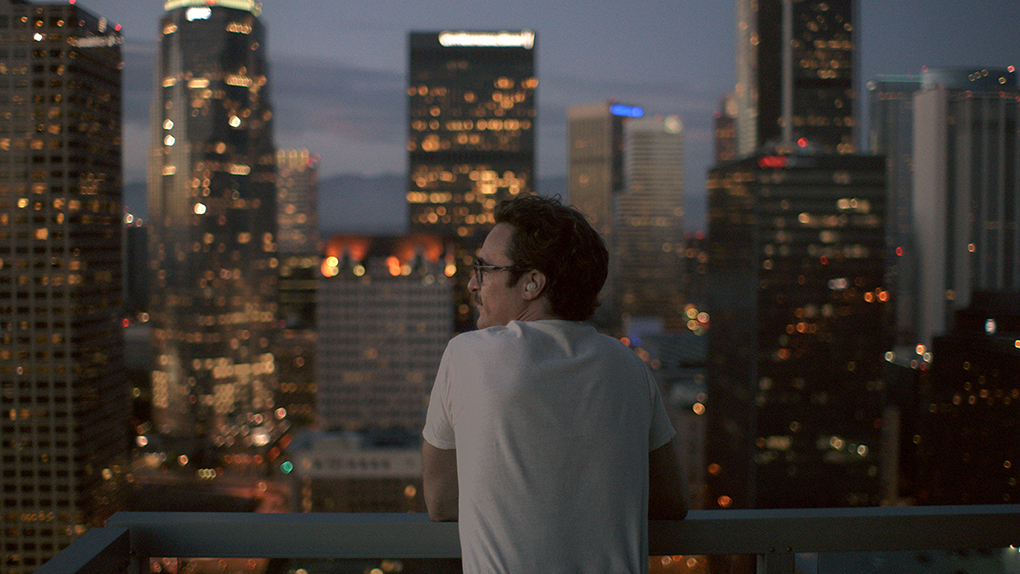
But Jonze seems to think through just about every aspect of his idea, and executes it in such a poetic way that it only ever feels like the story of a relationship, as opposed to, say, a technophobic fable or science-fiction conceit. There’s an amusing, recognizable honesty in Theodore and Samantha’s exchanges that highlight moments in "real" relationships: the awkward morning-after conversation that follows their first sexual encounter, the bemused daydreams that accompany a day trip to the beach, the desperate fear of not being able to reach, or find, a person whom you fear is drifting apart from you. And given that Samantha is a computer that learns about the world through her interactions with Theodore, it seems inevitable that she changes to incorporate the experiences she has — just as with a relationship between two people.
'Her' only ever feels like the story of a relationship, and never a technophobic fable or sci-fi conceit
At the same time, Theodore’s insecurities and his ingrained pathological responses create the same sorts of conflicts they would with another person, and the evolution of their relationship unfolds both with the awkward humanity of fumbling efforts to communicate and the clarity and perspective of a machine capable of assessing those efforts psychologically. On two occasions, Samantha attempts to compose music as a way of articulating her reaction to their shared experiences, and it’s telling that the second is more complex than the first — snapshots of specific moments that encompass the tone of their relationship and the experiences that led up to each one.
As with Being John Malkovich and Adaptation, Her wraps itself up with an ending that feels indefinite, but complete. The difference between this film and others more openly critical of technology is that the character’s interactions with his operating system would ordinarily stunt or inhibit the ones with the humans around him, but in Her the opposite proves true; ultimately, he’s better able to deal with the failures of his past and understand how not to repeat them in the future.
Ultimately, Her possesses the epic sweep of a science-fiction opus that speculates where we’re going as a species and how we might get there, and yet applies its discoveries to the individual. All of which is why it’s a modest sort of masterpiece, a truly great film that manages to make an unconventional relationship seem enormously rewarding, but mostly because it accomplishes in Theodore’s life what we wish real ones did in ours: teach us about ourselves, and help us to be more — not less — open to love.
Her opens in limited release on Wednesday, December 18th.
Follow topics and authors from this story to see more like this in your personalized homepage feed and to receive email updates.


