Intel’s highly-anticipated new 22nm processors have launched in 2013. They promise battery life and graphical performance boosts — see here for all the news on Intel’s latest.
Intel teases a new Haswell processor for thin, potentially fanless tablets
Intel’s new Haswell processors are quickly earning a reputation for huge gains in battery life and power efficiency, but the company had another surprise up its sleeve. Today, Intel’s announcing a limited run of the new Y-series chip that could potentially fit in extremely thin devices and ones that might not require a fan to cool them, like the fanless tablet that the company showed off at Computex 2013.
That’s because the new chip runs at a “scenario design point” (SDP) of just 4.5 watts, which basically means that it’s slow enough to spend most of its time comfortably living in a chassis designed to cool only 4.5 watts worth of heat. Though the silicon can actually boost speed higher for short periods as the temperature allows, it gives manufacturers flexibility to limit the processor to fit in smaller devices.
Read Article >Massive battery life, killer graphics: can Intel’s Haswell deliver on the hype?

Intel (STOCK) Those are some impressive numbers — if they hold up in real-world testing — but Haswell’s been billed as revolutionary, and the new Airs are anything but. Apple decided against tossing a Retina Display into the slim machines, and, presumably, if engineers thought Haswell would be good enough to maintain great battery life and performance with a high-res screen, we would have seen a Retina MacBook Air at WWDC. The question remains, then: Has Haswell delivered on the hype?
Intel’s partners (unsurprisingly) have touted the improvements featured in the next-generation processor as well: in a sizzle reel of sorts played at the company’s Computex keynote last week, a lineup of top executives from Taiwanese tech firms had nothing but good things to say. Acer corporate president Jim Wong said, “We see even higher performance with very amazing power management,” while an executive from manufacturer Quanta claimed that there “has never been a processor like this with such great performance and great battery life.” The rest followed suit.
Read Article >Intel launches Haswell processors: here’s what you need to know

haswell wafer 1020 stock press Last year, Intel’s Ivy Bridge processors provided a modest but very welcome speed bump, just in time for all of the crazy transforming computers which heralded the launch of Windows 8.
This year, the company’s new Haswell CPUs are poised to actually give those touchscreen computers the battery life and graphics power they so desperately need. Intel’s launching its fourth-generation Core processors this week, and it sounds like they’ll be a significant enough improvement in laptops and tablets that you’ll actually want to look for their name, perhaps even choosing a processor whose digits start with “4” rather than a cheaper one with “3” if a Windows 8 portable is what you need. While Haswell will obviously be in desktops and all-in-one computers as well, its benefits will probably be felt best in the thinnest crop of new machines.
Read Article >Intel’s new ‘Iris’ integrated graphics are up to three times better than last year’s versions

Intel stock When you’re buying a new computer with performance in mind, integrated graphics are generally not the ones you want. Even though they’ve improved greatly over the years, “Intel HD Graphics” has become synonymous with “doesn’t play things very well,” continually lagging behind dedicated GPUs from the likes of AMD and Nvidia.
Now, Intel hopes to break the cycle and the naming association in one fell swoop. The company claims its new Intel “Iris” Graphics, embedded in upcoming Haswell CPUs, can offer double or triple the performance of the Intel HD Graphics 4000 that comes with current Ivy Bridge processors. That’s significant: typically each generation offers only a double-digit percentage boost.
Read Article >Intel posts $13.5 billion revenue in Q4, but sees income drop 15 percent in 2012

Intel CES 2013 stock 2 1020 Intel has seen itself stuck in a difficult position as its primary business — PC processors — gets marginalized by the growth of smartphones and tablets powered by competitors’ chips. The company is managing to keep up with expectations, however, as it revealed in its earnings report today that it earned a total of $3.2 billion on $13.5 billion in revenue during the quarter. While Intel may have met Wall Street’s expectations, it is clear that it’s feeling the effects of the decline in PC sales (despite the recent launch of Windows 8), and Intel knows it. CFO Stacy Smith admitted “the PC market segment was impacted by the growth of tablets.” The company pulled in $400 million less than it did during the same period last year, and for the entire year, Intel is reporting a net income of $11 billion on $53.3 billion in revenue — a 15 percent drop compared to 2011. Additionally, the company’s PC Client Group is reporting a six percent drop in revenue year-over-year, and Intel’s “other” architecture group’s revenues were also down seven percent.
This time last year, decreases in Intel’s Q4 2011 earnings were explained by the rapid decline of the netbook and flooding in Thailand, both of which heavily impacted PC sales. The effects on the market from flooding has mostly subsided by this point, and the netbook was effectively killed off during 2012; declines in PC sales now can’t be so easily explained by one-off events like these. Instead, trends like the so-called “post-PC” era and a continued movement towards mobile computing may be what Intel is up against.
Read Article >Ultrabook, round two: can Intel control the future of the laptop?

Intel Kirk Skaugen interview There aren’t many companies that can set a new direction for the entire computer industry. Right now, three come to mind: PC manufacturers march to the beat of Microsoft’s Windows drum, and many follow Apple’s design. The third is Intel, which influences the market behind the scenes with ever more powerful processors and aggressive marketing campaigns.
In 2011, Intel told every PC manufacturer that it needed to have an answer to Apple’s MacBook Air, and offered $300 million, among other persuasions, to help OEMs develop and market new designs. Intel called it the ultrabook, and specified a set of ultrabook requirements in terms of thickness, responsiveness, and battery life. The manufacturers complied. While some PC vendors champed at the bit by selling machines that were visually identical to existing ultrabooks but that didn’t meet the specification, the new laptops still made a splash at first.
Read Article >Intel’s North Cape is a power-sipping, keyboard-detaching blueprint for Haswell PCs (hands-on)

intel northcape haswell stock 1020 Intel’s fourth-generation Haswell processors were the focal point of the company’s presentation today, and with its North Cape reference design, Intel aims to show the public what it can expect from the new chips. The detachable Windows 8 tablet contains a separate battery in the keyboard for extra power, and the sub–10W design means that users can expect to get in the neighborhood of 13 hours of battery life. But North Cape also has some flashier tricks up its sleeve. Firstly, its electromechanical locking mechanism can be disengaged with a single finger. There’s a key in the keyboard’s top-right corner that unlocks the tablet from the keyboard — a patent-pending technology that Intel plans to license to OEMs. The crucial portion of the mechanism in the center looks a bit like Apple’s old 30-pin connector, but Intel wasn’t ready to provide any more details into the technologies underpinning it.
The other trick is something called Smart Touch — the tablet’s 1080p screen can switch on the fly from displaying 13.3 inches to 11.6, either automatically when you remove it from the keyboard dock, or on command with a button hidden on the screen’s top edge. It sounds like a gimmick, but when you see how narrow the bezel is around North Cape’s screen, you can understand why people might want some more free space for their thumbs.
Read Article >Intel unveils fourth-generation Intel Core processor with ‘all-day battery life’
Intel is launching its latest Intel Core processor today at CES 2013. Formerly known as Haswell, the latest Intel chip will bring all-day battery life to the latest ultrabooks. Intel says this will equate to around 9 hours of continuous battery life on new systems. This new chipset is designed for a new ultrabook detachable reference design codenamed North Cape that converts into a 10mm tablet which will run up to 13 hours while docked.
Intel showed off a reference design on stage that has a battery both underneath the keyboard and behind the display on a Core i5 / i7 system. Along with the new reference design, Intel says ultrabooks will require touch input for fourth-generation Core systems. Intel didn’t provide exact timings on when systems will arrive with its latest processors, but expect to see them regularly in new Windows 8-powered devices throughout 2013.
Read Article >Intel plans 10-watt Ivy Bridge processors for 2013, signaling longer battery life or thinner PCs

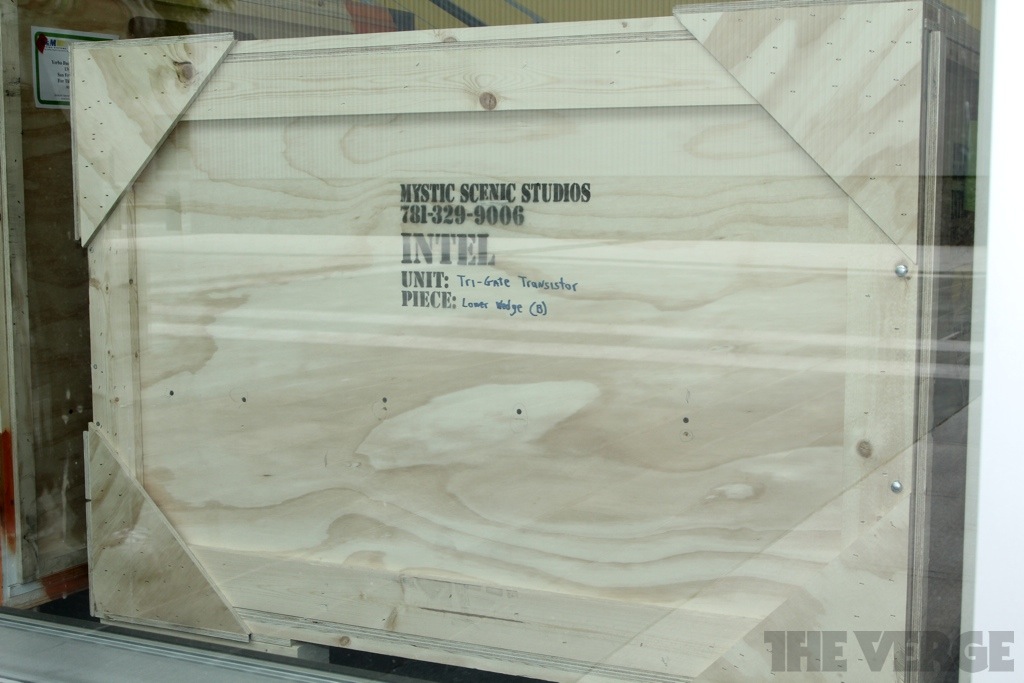
Intel tri gate transistor crate stock 1024 If you want to build or buy an ultrathin laptop with Intel inside, you’ve got a difficult choice. Right now, you can pick between a powerful Core i3, i5 or i7 processor which might not make it through your average workday, or a comparatively weak Atom chip with an estimated 10 hours of battery life. If you’re willing to wait until the middle of next year, though, there might be a third option. Intel’s planning to drastically reduce the power consumption of its existing Ivy Bridge silicon architecture to a TDP (thermal profile) of just 10 watts.
Currently, the ultra-low voltage Ivy Bridge processors you’ll find in thin laptops like Apple’s MacBook Air have a 17-watt TDP, and though Intel already provides software that can tune them down to 13 watts as well, we’d thought that we’d have to wait for Intel’s next-gen Haswell design to see a 10-watt design. Not so: at the Intel Developer Forum in September, the company announced that it will be able to bring Ivy Bridge down to ultrabooks with sub-10-watt parts.
Read Article >Intel’s power-efficient Haswell processor targets thinner laptops with new 10-watt TDP
Intel’s holding its annual developer conference next week, from September 11th through the 13th, and while a certain Cupertino computer company will undoubtedly dominate the news on day two, Intel will also have a few things to reveal. Chief among them is the firm’s next-gen Haswell architecture, which is still on track for 2013. Well, actually, it’s not merely on track: Intel tells us that at least one version of highly integrated system-on-chip is now slated to have a 10-watt TDP. “It’s really the first product we’re building from the ground up for ultrabook,” a representative says.
What does that mean? Well, TDP (“thermal design point”) refers to the amount of cooling a system requires to dissipate a chip’s heat. Presently, Intel’s ultra-low-voltage Ivy Bridge processors, which you’ll find in a variety of ultrabooks, have a 17W TDP — half that of a standard 35W laptop part, but still retaining a sizable amount of performance as we’ve seen. Originally, we’d heard Haswell would have a 15W TDP, only a slight decrease from those ULV chips, but with a 10W TDP, laptops could be even thinner or include more battery than before, with the space they save on heatsinks, heatpipes, and fans.
Read Article >Intel’s 2013 Haswell microarchitecture to use transactional memory, increasing multi-core performance

Intel Haswell roadmap slide When Intel announced its Haswell next generation processor microarchitecture (the one after Ivy Bridge) in September of last year, it said that it would re-invent the notebook. We already knew that the 22nm platform would offer a 30 percent power savings over Sandy Bridge, and now the company has let loose a few more details: Haswell is going to use transactional memory, which Intel is calling Transactional Synchronization Extensions (TSX), to allow high performance on multicore processors while keeping the programming familiar for developers. As explained in an Intel blog post, without TSX the system locks shared resources when they’re modified by a thread and prevents other threads from making changes until the lock is disengaged. The problem is that multiple threads could safely work at the same time so long as they didn’t overlap, but in order to keep programming efficient (and easier to troubleshoot), locks cover large areas.
Intel explains that with TSX multiple threads are allowed to work concurrently where they weren’t before, so long as they don’t attempt to access or modify the same resources at the same time — if they do, a locking system will be implemented, and one process will happen after the other. According to the company, this will increase performance (as fewer operations will have to be delayed due to locks) while working in a way that developers are already comfortable with. If you’re worried about compatibility, you’ll be glad to hear that Intel’s first implementation of TSX will play nice with the traditional locking method if you’re not on a Haswell chip.
Read Article >Intel’s 22nm Haswell microarchitecture detailed in a set of leaked slides

intel cpu What awaits Intel after it crosses the Ivy Bridge on its 2012 horizon? Why, it’s Haswell, a processor microarchitecture that will also be built at 22nm, but will include a number of major changes for the company, some of which have now been revealed by a leaked set of slides. Chief among them will be the move to a single-chip solution (a so-called multi-chip package) on the more energy-conscious variants, which means that Intel will be offering mobile device manufacturers something very similar to the ARM-based systems-on-chip that they currently choose from. This more space- and power-efficient (15W TDP) platform for Haswell will apparently be limited to two cores, but will support LP-DDR3 in a dual-channel configuration. Moving to two chips will allow quad-core options as well, with DDR3 and DDR3L (low power) memory supported, again with two channels. Sadly, anyone contemplating an upgrade for their current desktop should abandon hope now as there’ll also be a new socket required: LGA-1150.
The slides include a laundry list of other features and improvements, including NFC, Thunderbolt, a faster integrated GPU, a new voltage regulator, and a mysterious hardware / software optimization that promises 2-second boot times. It’s all very detailed and, unfortunately, still very far away. Nonetheless, if you want to immerse yourself in information about what the next big change in x86 CPUs will look like, hit the links below for the full story.
Read Article >Intel announces Haswell microarchitecture for 2013 CPUs with improved power efficiency

At IDF today, Intel announced the successor to its yet-to-be-released Ivy Bridge architecture, codenamed Haswell. This platform, built at 22nm like Ivy Bridge, has been leaked multiple times dating back to 2008, so hearing it become official today comes as no big surprise. The good news is that Intel already has the chip running with a 30% reduction in active power consumption over current-generation (Sandy Bridge) Core i5 chips and is aiming for a 20-fold improvement in standby time. Both enhancements should theoretically come without a significant reduction in processing power by 2013. Intel gave a brief demo of a prototype running off a tiny solar cell (to animate a cat GIF, of course) and while the release is obviously a ways off, it’s the first sign here at IDF that Intel is trying to show how serious it is about power consumption. Follow the break for more shots.
Source: Intel
Read Article >