We’ve been in the desert for days and at long last, the show floor is finally opening, rain or shine (spoiler alert: it is most definitely raining here in Las Vegas.) But that’s not going to stop us from tracking down the biggest news in laptops, cars, giant screens, and larger than life tech. Follow along today for all the latest from CES 2018.
This wireless MIDI ring allows you to perform musical effects with hand gestures
 Photo by James Bareham / The Verge
French company Enhancia has been working on the concept for its MIDI ring for over a year, and it’s finally coming to Kickstarter in March. The tiny accessory, worn on the index finger of your right hand, allows a user to trigger musical effects like pitch bends or vibrato by making specific movements while playing a keyboard.
The ring, which is lightweight and made out of a soft plastic with a metal accent, communicates with a hub that is connected to your computer. The hub both charges the ring and also tells the ring which effects are mapped to which movements. There’s also a standalone piece of software and a plugin, which can be used with a Digital Audio Workstation, like Ableton or Logic.
Read Article >Tech for the elderly is a growing area, but founders should think more about whether their gadget will be used

$800 Hip’Air airbag belt for fall prevention Photo: Hip’AirHealth gadgets aren’t just for the young. The elderly population is a growing business opportunity, and the category of “aging tech” now includes everything from smart hearing aids to connected toolkits for relatives with dementia. It’s an important area with plenty of problems to solve, but some of the biggest problems with caretaking are social, and the highest-tech gadget won’t do a thing if your grandmother refuses to use it.
Everyone grows old, but Americans are growing older more quickly. The number of Americans over 65 will double by 2060, according to a 2016 report by the Population Research Bureau, and the elderly are living longer, too. According to the Society of Actuaries, if a woman on a pension plan lives past 65, she will, on average, live to be 87.6 years; for men, that number is 85.6 years. “There are already risk managers and insurance people telling people out there to plan to live to 95,” says Laurie Orlov, the founder of Aging in Place Technology Watch. There is a place for technology here, though perhaps some of these companies haven’t thought through their concepts quite enough.
Read Article >Huawei releases a mesh Wi-Fi system it claims has ultrafast connection speeds

Huawei’s three-pack. Huawei doesn’t just make smartphones and laptops; it’s also getting into mesh Wi-Fi. Yesterday at CES, the China-based company announced a hybrid whole-home Wi-Fi system.
Like other mesh Wi-Fi systems, Huawei’s Wi-Fi Q2 system aims to send a stable signal through a large home or an estate. There are two options: a base and two satellites, which would rely on G.hn PLC technology to deliver gigabit data over electrical, telephone, and coaxial wiring, or a hybrid three-pack, which relies on both wired and wireless connections.
Read Article >SteelSeries’ new Rival 600 gaming mouse tracks your movements in mid-air
 Photo: SteelSeries
SteelSeries’ new mouse, the Rival 600, is designed to eliminate an obvious problem for gamers: keeping track of the cursor in mid-air. Sometimes, when a player lifts their mouse off the mat and places it back down, the cursor can jump and skitter across the screen. The Rival 600 compensates for this with a dual-sensor system and 1-to-1 tracking that keeps tabs on how high the mouse is lifted, making sure the cursor stays in the same place when it’s put back down.
This isn’t a new feature for gaming mice, but it is a nice addition for the Rival range. As well as this tracking system (which SteelSeries has branded “TrueMove 3+”), the Rival 600 also has customizable interior weights, which users can add or remove to get the desired heaviness they’re most comfortable with. There are eight 4g weights inside, so the mouse can be changed to weigh between 96 grams and 128 grams.
Read Article >Samsung will unveil the Galaxy S9 next month
 Samsung’s Galaxy S8. Photo by Amelia Holowaty Krales / The Verge
Samsung will unveil its next flagship handset, the Galaxy S9, next month at Mobile World Congress (MWC). The company’s smartphone chief, DJ Koh, confirmed the launch to ZDNet at CES yesterday. Koh didn’t offer a specific date, but MWC will run from February 26th to March 1st this year, so expect the unveiling to fall somewhere in that time frame.
The S9 (and, presumably, an S9 Plus) will be the successors to the S8 and S8 Plus, which launched at a Samsung event in New York last March before going on sale in April. The S8 and its bigger brother were a hit with critics, who praised the phones’ gorgeous design and brilliant cameras. The phones were even good enough to make consumers forget about the disaster of the Galaxy Note 7 and its exploding batteries.
Read Article >This Wi-Fi speaker uses Amiibo-like figures to play music
 Photo by Ashley Carman / The Verge
I don’t think of kids when I think of RFID tags, but congrats to MuuseLabs for making the connection for me. Jooki is a Wi-Fi speaker for kids. It ships with five figurines, each of which has an RFID tag embedded inside. Kids can place their toy on the speaker to cue it to play different playlists that their parents have set up. The idea is to offer kids a way to interact with physical media, since they don’t buy CDs anymore, and help parents keep them away from screens.
I checked Jooki out today at CES and found it charming. The figurines are adorable, and I love the idea of delaying kids’ screen time while still enabling them make their own decisions and interact with their own devices. The speaker pairs with a companion web app or iOS / Android app, where the playlists are defined. Parents can include songs from internet radio stations or local files. They can also record their own voice and use it to read a book to their kids or say goodnight. The company tells me it’s working on a partnership with bigger streaming platforms, which seems essential for its success.
Read Article >Matias is building the wired Mac keyboards that Apple won’t

Apple discontinued its wired Mac keyboard back in June when it introduced a new version of its wireless Magic Keyboard with a number pad, but a company called Matias is trying to keep the wired version alive with its own replica versions. And this year at CES 2018, the company is looking to one-up Apple’s now discontinued version with a new model that features RGB backlighting.
Matias’ keyboards look and feel almost exactly like Apple’s versions — the keys, design, and materials are all near-replicas of the original models. The only real addition is a slider on the back that allows users to rotate through a variety of colors, and a function key that lets you adjust brightness by holding it down and pressing a number on the keypad. (For example, to adjust to 20 percent, hold the function key and press “2.”)
Read Article >Realmax’s prototype AR goggles fix one of the HoloLens’ biggest issues
 Photo by Vjeran Pavic / The Verge
Hong Kong-based Realmax is an augmented reality startup, one of many trying to crack the highly sought-after smart glasses market that’s taken CES by storm this year. The company’s prototype product, which it’s brought to the show floor in Las Vegas this week, is very much a work in progress, but it does have one promising step up over the competition: the product has the widest field of view (FOV) of any AR device I’ve ever personally tried, including the HoloLens.
I didn’t get to spend an extensive amount of time with the Realmax headset, but I did try two different demos, the first of which filled my field of vision with a mermaid and a school of ocean-dwelling fish. The second floated virtual satellites around a 3D map of the Earth floating in front of my face. They were super rudimentary demos, and it’s clear the prototype is many months away from resembling anything close to a finished product. Aesthetically, RealMax’s prototype headset looks like it was cobbled together by a handful of off-the-shelf parts.
Read Article >This phone case is a drone

AEE Aviation Technology’s Selfly is a phone case that turns into a drone. Your first question is probably “does it fly with the phone in the case?” The answer is no. Which is undoubtedly for the best, since I don’t think it would do a very good job of protecting your phone when its battery runs out after four minutes. Even though it is a case.
Anyway, by no means is this a practical product, but it is a great example of how drone technology — 1080p video cameras and all — is trickling down to entirely unrelated, inexpensive gadgets. Maybe one day everything will have retractable propellers. The Selfly will be available sometime this quarter for $130; that price includes two batteries.
Read Article >This weight-loss headset is more likely to give you a headache than budge the scale
 Photo: Modius Health
Modius Health wants you to believe that weight loss is more in the brain than in the body — and that wearing its headset can help you lose weight without extra effort. Most likely, it’s too good to be true. Plus, the headset gives you a headache.
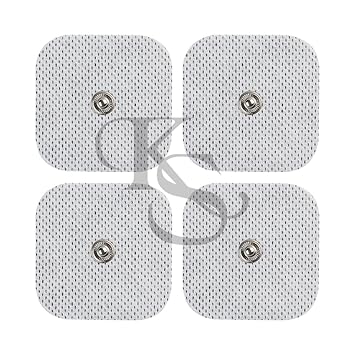
The headset is made of white plastic and has two bits that hang behind your ears. You attach little sticky electrode pads on the back of your ears and use them to hook in the little bits. Then, you turn the gadget on and it starts sending electrical signals to your brain. There are 10 settings. At settings one and two, I didn’t feel anything. At setting three, I immediately felt a tingling in the electrode pad and started to feel a little disoriented and nauseated, like I was swaying. It was unpleasant.
Read Article >The Blocks modular smartwatch is finally available to buy after years of delays
 Image: Blocks
It’s been a long road to market for Blocks, a modular smartwatch that was first announced back in 2015, but at CES 2018 the company has said that it’s finally selling watches to the general public (via TechCrunch).
To recap, Blocks was first announced three years ago at CES 2015, as a very early prototype that first floated the idea of a modular smartwatch. Blocks hit Kickstarter in October 2015, promising to ship by May 2016 to backers. It didn’t ship then, but the company opened up preorders to new customers anyway in June 2016 with shipments meant to arrive later that year in October. Blocks missed that window, too, only starting to ship the first batches of finalized devices to Kickstarter backers in September 2017. But now, it seems like Blocks has finally figured it all out, and is putting the device up for anyone to order.
Read Article >Huawei will sell Mate 10 Pro in the US online after AT&T calls off deal

Huawei was widely expected to announce its first flagship smartphone partnership with a major US carrier at CES this week, but AT&T pulled out of the deal — possibly for political reasons — at the eleventh hour. If you live in America and do really want the Mate 10 Pro, though, you will at least be able to buy it online this spring through Amazon, Best Buy, and other retailers.
Huawei is pricing the unlocked device at $799, which gets you a 6-inch 18:9 OLED screen, the AI-infused Kirin 970 processor, Android Oreo, 6GB of RAM, 128GB of storage, and a Leica-branded 12-megapixel dual camera setup. It’s a capable phone, to be sure — just not one that’s going to be able to compete on level terms in the US market without any presence in carrier stores.
Read Article >Philips releases a headband that plays white noise to help you sleep
 Image: Philips
Philips just came out with a new headband that plays white noise to help your brain get to sleep.
Although Philips’ headband looks like an ill-formed diaper, its weird design attaches built-in sensors to your forehead in order to detect brain activity. Then it shares that data with a connected mobile app. When deep sleep is detected, the headband’s speakers will start playing white noise in a slowly repeating pattern, which Philips claims will reinforce a good night’s sleep.
Read Article >Sony’s marble-topped projector will look incredible in your penthouse apartment

The image you get from Sony’s newly unveiled $30,000 4K projector isn’t as good as the image you’ll get from one of the company’s many pricey but still far-less-expensive OLED TVs. But the presentation you get from having this incredible projector in your room instead of a dull black TV is unquestionably worth the trade-off. That is, as long as you’re spectacularly rich and highly focused on the interior design of your hip and modern new apartment.
I don’t know who, if anyone, will actually buy this thing — known as the 4K Ultra Short Throw Projector. Sony suggests it’s meant more for businesses that want an impressive piece for their lobby, since it also includes built-in speakers. There are a lot of better ways businesses could spend their money, but this option definitely works if showing off is their objective.
Read Article >Can ‘bicycle-to-vehicle’ communication help make cycling safer?
 Photo by Gary Hershorn/Getty Images
Cyclist deaths are at a historic high: 840 bicyclists were killed by automobiles in 2016, the highest number since 1991. In an effort to prevent further mayhem on the roads, Trek Bicycle is working with Ford Motor Company and Tome Software to create a “bicycle-to-vehicle” communication system, the companies announced at CES today.
We hear a lot about “vehicle-to-vehicle” (V2V) communication and “vehicle-to-everything” (V2X) communication. Cars with the right software can use cellular technology or a high-speed, low-latency medium called dedicated short-range communications (DSRC) to communicate with each other. This effort to connect our cars to each other and the world around them is part of a broader initiative to pave the way for the mass deployment of autonomous vehicles. But what about vulnerable groups like pedestrians and bicyclists?
Read Article >AKG’s new $1,000 in-ear headphones promise studio-quality and have interchangeable sound filters
 Image: AKG
AKG has announced its new N5005 in-ear headphones at CES, clocking in at just under $1,000. The headphones expand on AKG’s Studio on-the-go Series, offering a variety of cables, ear tips, and filters to suit the preferences of audiophiles and musicians.
The N5005 is beautifully sleek, coming in a scratch-resistant, high-gloss black. Each one comes with a unique serial number, engraved on a tiny puck inside the box. High-res audio support means it can deliver higher than CD quality resolution, and a hybrid of AKG’s One Dynamic and Quad BA drivers give it a five-way design promising “ultra-low distortion, accurate mids and crystal-clear highs.”
Read Article >Sennheiser’s first soundbar has 13 speakers and sounds amazing

Sennheiser is one of the best known companies in the audio world, and yet it’s never made a consumer speaker. This year, that’s supposed to change. At CES today, Sennheiser began showing a prototype soundbar that it intends to launch by the end of 2018.
The prototype’s body is unfinished, but the speakers are working. I got to hear them inside a small, square room, as a Sennheiser representative switched between nature sounds, musical performances, and movie action sequences, including the snowstorm and the beginning of Fury Road. But I didn’t need to hear half of that to realize Sennheiser’s first soundbar sounded way better than any soundbar ought to.
Read Article >The full keyboard Moto Mod is a real product that you’ll be able to buy this year for $99
 Photo: Tom Warren / The Verge
Back in April, we were forced to acknowledge that the Indiegogo crowdfunded Keyboard Moto Mod was actually a real physical device. This year at CES 2018, Motorola has announced that you’ll actually be able to buy one soon for $99.
The Slider Keyboard Moto Mod, developed by a third-party company called Livermorium, was the winner of Motorola and Indiegogo’s Transform the Smartphone Challenge, after which it was put through Motorola’s Accelerator Program where the cellphone company worked on the device alongside Livermorium. And now, a finished version of the mod is set to be released sometime in the next month or two.
Read Article >Toyota and Lexus vehicles will add Amazon Alexa this year
 Photo by Amelia Holowaty Krales / The Verge
Toyota is the latest automaker to adopt Amazon’s Alexa in its vehicles, announcing a partnership at CES that enables the assistant to work with its newest infotainment platforms.
On Tuesday, Toyota said vehicles with the Entune 3.0 infotainment system, and Lexus models with the Enform 2.0 system, would start to get Alexa capabilities this year. The automaker did not announce in its release which specific models would get it, but Entune 3.0 debuted last year on the 2018 Toyota Camry. The automaker said more models would be compatible with Alexa in 2019.
Read Article >JVC releases more wireless headphones for different occasions
 Image: JVC
Like many other headphone makers at CES this year, Japanese electronics company JVC released several wireless headphones, bringing us ever closer to a wireless future where we’re all juggling a dozen chargers in our bags.
JVC is launching the new HA-ET90BT wireless sport headphones aimed at athletes. JVC claims its headphones have a water resistance rating of IPX5. The headphones are supposed to stay in place during a workout thanks to a rubber fin at the top of each earpiece that adjusts to a user’s ear shape. Users can choose from three different sizes and either a conventional earpiece style or an “open” ear style that lets runners hear nearby noises in their surroundings. The left earpiece has a built-in microphone and a button that controls music playback.
Read Article >Vuzix Blade AR glasses are the next-gen Google Glass we’ve all been waiting for
Vuzix, a Rochester, New York-based display provider, has been trying to resurrect the promise of Google Glass for years now, but this year’s iteration finally feels ready. The company’s new product, called the Vuzix Blade, was unveiled at CES this week in Las Vegas. It’s a pair of augmented reality smart glasses that float a screen in the upper right corner of your vision. But unlike previous iterations, in which the technology protruded in ugly and apparent fashion, the Blade is the first device Vuzix has developed that contains nearly every aspect of the display and its power source within the eyewear frames.
The company has partnered with Amazon to bring Alexa integration to the device, making the Blade the first pair of AR glasses to make use of Amazon’s voice-based digital assistant. And the glasses are not just a prototype. Vuzix plans to deliver a developer version of the product in the next few months, with a consumer version coming in the second quarter of this year. The price right now is $1,000, but Vuzix hopes to bring it down to less than $500 with future generations.
Read Article >Aeolus is the beer-from-fridge bot we’ve all been waiting for
After years of wondering when a consumer robot will be released that can finally relieve me of the drudgery of going to the fridge for a cold adult beverage, Aeolus might have the answer. Last night at CES, I witnessed this chunky new wheeled robot from Aeolus Robotics pick up a can of Coke with its grabber arm, swing around, and hand it to me.
Of course, beverage delivery isn’t all it’s designed to do. Aeolus is supposed to be a general household helper. It can supposedly recognize “thousands of items,” and wander around your home putting them back where they belong. If you lose your glasses, Aeolus could help you find them. It also has a modular attachment on its left side that can grip a vacuum cleaner or a broom for cleaning jobs. There’s even a chair-moving function.
Read Article >Tractive announces its first GPS tracking collar for cats
 Image: Tractive
Tractive, a company that specializes in GPS trackers for pets, has announced two new products at CES: a new Tractive GPS dog tracker and Tractive GPS Cat, the company’s spinoff for felines.
The new Tractive GPS Dog tracker has a slew of new updates beyond the initial changes in design and form factor. It now has quick-switch removable batteries so the collar can always stay on, and has integrated activity tracking — something that used to be an entirely separate product called Tractive Motion. Tractive Motion had a dedicated app for the older collar, which told owners information about how active the pet was (broken down into categories of “lazy,” “active,” and “dynamic”). The tracker can be easily clipped to a dog’s collar, and detached by pressing a button.
Read Article >Watch Circuit Breaker Live from CES Day 1, and tune in live at 5PM ET today!
CES is bonkers, and yesterday’s Circuit Breaker Live was just as bonkers. We had a flying drone, we had robots, we replaced an iPhone battery, and we even had a real live Sam Sheffer at the Hype Podium. If you happened to miss it, you can catch the replay right here, right now. Congratulations.
And if you want to catch today’s episode, it’s not too late! We go live on Twitter at 2PM PST, which is 5PM EST. We’ll have more robots, a weird new interface, and of course more Sam Sheffer. Make sure to send your questions to #circuitbreakerlive to get them answered live on the show. Also make sure to bring an umbrella: it’s raining in Vegas!
Read Article >B&O Play’s new H9i and H8i wireless cans have better battery life and design

Beoplay H9i Photo by James Bareham / The VergeThe torrent of wireless headphone news at CES 2018 continues with one of my personal highlights: B&O Play is updating its H8 on-ear and H9 over-ear wireless headphones with new, longer-lasting models. The sound has been retuned, with the company boldly proclaiming that the H8i and H9i are “designed to overwhelm you with precision, power, and detail.”
The new H9i still has the same stitched cowhide leather headband, anodized aluminium ear cups, and lambskin pads with memory foam. But it makes two major improvements in switching to USB-C for charging — as I’d implored B&O Play to do in my original H9 review — and it gets four more hours of playtime out of its battery with a new rating of 18 hours.
Read Article >


Most Popular
Most Popular
- The iPhone Duo is a messy, expensive, good time
- Trump says Sundar Pichai talked him out of renaming the Atlantic Ocean
- Bill Gates says to prepare for 20 years of ‘tumultuous’ AI disruption
- Tesla driver using Full Self-Driving struck and killed a man crossing I-80
- PHP: The three letters that shut down sites all over the internet today